

Eleven tabs, three identical-looking devices, zero clarity. Here's what actually matters when you buy a vaporizer in 2026, from heating type to cleaning.
Your browser has eleven tabs open. Three of them are vaporizers that look identical, two are reviews that contradict each other, and one is somehow a recipe for banana bread.
Every product page promises "precision", "power" and "next-level flavour". None of them tell you which of those words actually matters.
Buying a vaporizer is not hard once you know which ten questions to ask. The trouble is that spec sheets are written to impress, not to explain.
So instead of a top-ten list that ages by Friday, this guide gives you the questions that sort a good device from a shiny one, from heating type and temperature control to battery, chamber, materials, price tiers and cleaning. Where our own Weedorizer Vaporizer fits a point, we'll say so and show you the spec. Everything else lives in our vaporizers range. This is a guide for adults 18+.
Pick your priority in ten seconds
| If you care most about… | Look for | Watch out for |
|---|---|---|
| Control over every session | Adjustable temperature, ideally in fine steps | "Smart heating" with no stated range |
| Long days away from a socket | Battery capacity in mAh plus a rated runtime | "Long-lasting" with no numbers |
| Zero faff | A cartridge battery or a ready-to-use pen | Expecting a herb chamber to be as quick |
| Durability | Stainless steel or ceramic heating parts, clear certification marks | No material listed at all |
| Easy upkeep | A chamber you can reach and brush out | Parts that can't be taken apart or replaced |
1. Decide what goes in it before anything else
The single biggest fork in the road is not the brand or the colour. It's what the device is designed to heat.
A dry-herb vaporizer has a chamber you fill with ground plant material, such as CBD buds, and is designed to heat it without burning it. You choose what goes in and how much, and you load it fresh each session.
A cartridge battery or vape pen heats a pre-filled oil or liquid. There's nothing to grind and nothing to pack, which is wonderful on a Tuesday when your patience is already spoken for.
Neither is "better". They suit different routines. If you like ritual and choice, a herb device makes sense. If you want to press a button and get on with your evening, a cartridge setup wins. Our vaporizer vs vape guide goes deeper on the difference.
The rest of this guide focuses mainly on dry-herb vaporizers, because that's where the spec sheets get the most confusing.
2. Heating type: conduction, convection or a bit of both
Every dry-herb device has to get heat into the material somehow. There are two basic ways, and most marketing language is a dressed-up version of one of them.
- Conduction: the chamber walls heat up and the material touching them warms through contact. It's simple, compact and common in portable devices. Stirring the chamber halfway through helps the middle catch up with the edges.
- Convection: hot air is drawn or pushed through the material, heating it more evenly. It usually adds cost and complexity, and the experience can depend more on how you draw.
- Hybrid: a mix of both, common in mid-range and premium devices but also used loosely in marketing, so check what the manufacturer actually means by it.
For a first device, a well-built conduction vaporizer with good temperature control is a perfectly sensible place to start. You can always get fancy later; your wallet will tell you if you've gone too far.
3. Temperature control: presets or precision
Temperature control is the feature that most separates a capable device from a basic one. Lower settings tend to give cooler, more flavourful vapour; higher settings usually give thicker, warmer vapour and use up the material faster. People often describe finding a "sweet spot" they then stick to.
Devices handle this in three broad ways:
- Single fixed temperature: one setting, take it or leave it.
- A few presets: typically three or four heat levels, often shown with a colour-coded light. Easy, but coarse.
- Fine adjustment: you set the temperature yourself across a stated range.
Whatever you look at, check that the page states an actual range in degrees. "Optimised heat" is a mood, not a specification.
4. Battery and charging: read the numbers, not the adjectives
A portable vaporizer is only as portable as its battery. Two numbers tell you most of what you need: capacity in mAh and the manufacturer's rated runtime.
Capacity alone can mislead, because a device that heats higher or longer drains faster. A rated runtime gives you a more practical yardstick, even if your real-world mileage will depend on your settings and how long your sessions are.
Then look at the charging details:
- Port type: USB-C has become the standard on most new electronics (in the EU it has been required on phones, tablets, headphones and similar gadgets since December 2024), but vaporizers aren't covered by that rule, so some still use micro USB. Neither is a deal-breaker; it just decides which cable lives in your bag.
- Removable or built-in battery: built-in is simpler and more compact; removable means you can swap in a spare.
- Use while charging: handy at home, but don't assume it. Check the manual.
Battery basics apply too: charge with the cable that came with the device (or an equivalent one), don't leave it charging unattended or overnight, and don't store it somewhere hot. A glovebox in August is not a storage solution.
For reference, the Weedorizer Vaporizer's product page lists a rechargeable 2200mAh battery that lasts up to 90 minutes per charge, charged through a micro USB port on the bottom of the device.
5. Chamber size and materials
The chamber is where the action happens, so it's worth a closer look than the paint job.
Size. Chamber capacity is usually given in grams. A smaller chamber suits short solo sessions; a larger one suits longer sessions or sharing. In conduction devices especially, a very large chamber you only ever half-fill can heat less evenly, so bigger is not automatically better. Nobody needs a family-size chamber for a quiet Tuesday on the sofa.
Materials. What matters most is what touches the hot air and your herb on its way to you. Look for the heating chamber and mouthpiece materials to be stated clearly; stainless steel and ceramic are common choices for heating parts. If a page lists every feature except what the chamber is made of, that silence is information.
Grind. A medium, even grind is a good starting point for most dry-herb devices: too fine can clog the screen, too coarse can heat unevenly. Your device's manual may recommend something different, so check it first.
6. Price tiers, and what every price should include
Vaporizer prices run from "cheaper than a takeaway" to "please don't tell my partner". Rather than chase a number, think in tiers and know what each one should include.
- Entry level: simple pens and basic devices, often with fixed temperatures or a few presets. Fine for trying the idea out; check the materials and the warranty carefully.
- Mid-range portables: look for adjustable temperature, a stated battery spec, clearly listed materials and a clear warranty.
- Premium portables and desktop units: often add convection or hybrid heating, extra features and apps, with bigger price tags to match. Lovely if you'll use the extras; expensive if you won't.
What every tier must include
Whatever the tier, some things should never be optional. The boring bit that protects you: in the EU, the CE mark is the manufacturer's declaration that a product meets the EU requirements that apply to it, and the RoHS Directive (2011/65/EU) restricts certain hazardous substances in electrical and electronic equipment.
Since 13 December 2024, the General Product Safety Regulation (EU) 2023/988 has applied across the EU, setting general safety duties for consumer products and the businesses that sell them.
Not exactly page-turner material, we know. But this is the small print that keeps a cheap gadget from becoming an expensive lesson.
So, at any price: look for the certification marks, a named manufacturer or seller you can contact, a stated warranty and a manual in a language you read. The Weedorizer Vaporizer's page lists CE, RoHS and FCC marks (FCC covers radio interference in the US), and its battery comes with a 6-month warranty, on top of your statutory EU consumer rights.
7. Cleaning and care: the unglamorous bit that matters most
Nobody puts cleaning in the advert, but it's the difference between a device that still tastes good in month six and one that tastes like last month's leftovers. Think of it as flossing for your vaporizer: dull, quick and very obvious when skipped.
- After every session or two: let the device cool, empty the chamber and brush out loose bits with a small brush.
- When the draw feels tight: check the screens and the mouthpiece for build-up, and clean or replace them.
- Deep clean: follow the manufacturer's instructions. Many manuals allow cotton buds and a high-strength alcohol (isopropyl or ethanol, whichever yours names) on removable metal or glass parts. Never use it on the electronics.
- Cool first, dry completely: let everything cool before you clean it, and put it back together bone-dry before you switch it on again.
When you're comparing devices, ask yourself how easy the chamber is to reach and whether screens and mouthpieces can be replaced. A device you can't clean is a device with a short future.
Your ten-question checklist before you click Buy
- What does it heat: dry herb, or cartridges and liquids?
- Conduction, convection or hybrid, and does the page say what it means by that?
- Is the temperature range stated in actual degrees?
- Is the battery given in mAh, with a rated runtime?
- Which charging port does it use?
- How big is the chamber in grams, and does that suit how you use it?
- Are the chamber and mouthpiece materials listed?
- Does it carry CE and RoHS marks?
- Is there a seller you can contact, a stated warranty and a manual in a language you read?
- Can you reach the chamber to clean it, and can you replace the screens?
Eleven tabs, ten questions, one device. That counts as progress.
The vaporizer shelf
Checklist done, banana bread tab finally closed. If you'd like to start from our own range, three things that fit this guide:
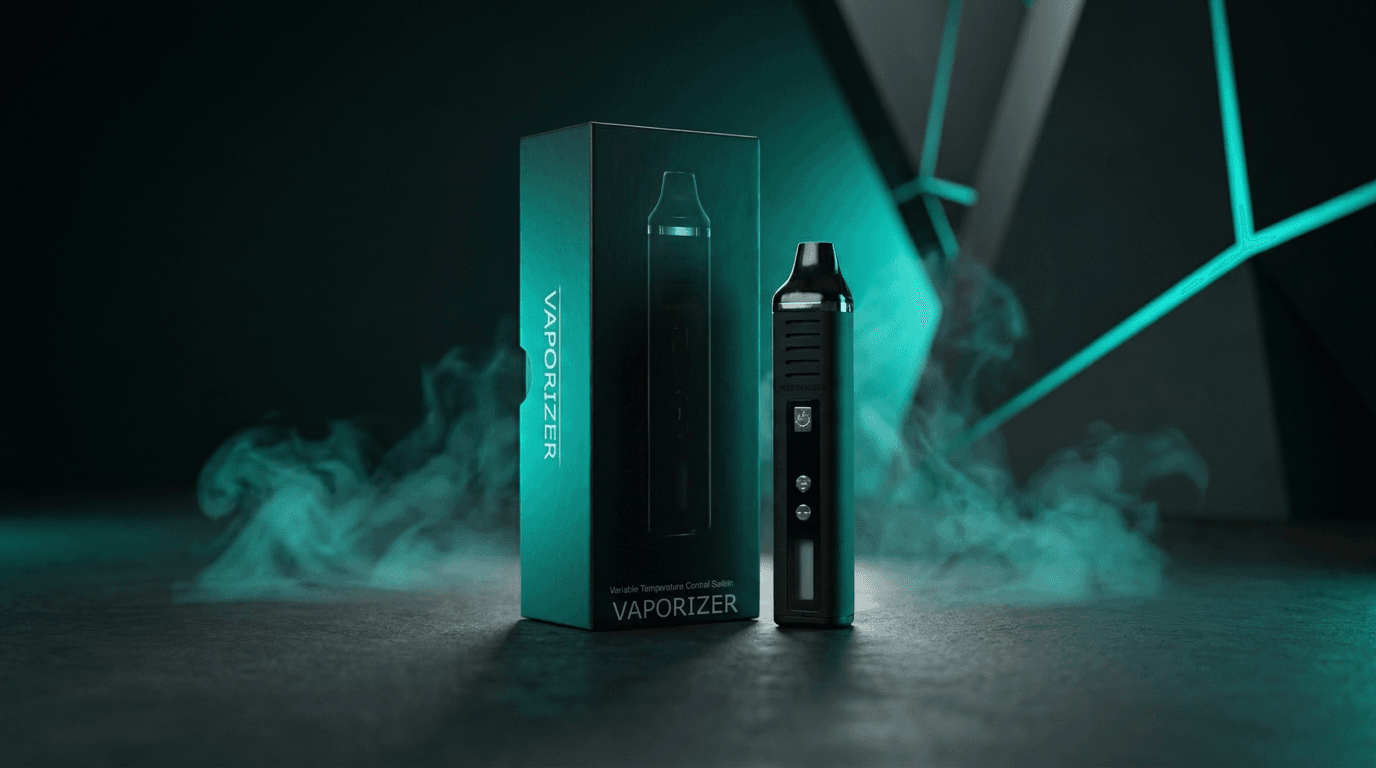
- Weedorizer Vaporizer: our dry-herb device, with single-degree control from 93 to 220℃ and a 0.3 g chamber, €149.
- Weedorizers Grinder: the 60 mm metal grinder with a magnetic lid, for an even grind before you load up.
- Super Silver Haze CBD: CBD buds sold by the gram, a ready-to-grind starting point if your new device arrives before you've chosen what to put in it.
Prefer the no-loading route? The cartridge options in section 1 skip the grinding entirely. Each product page lists exactly what's inside and what the device does. Rules on hemp and CBD products differ between countries and change often, and some restrict items such as hemp flower, so please check yours before ordering. We strive to offer only products that are 100% legal throughout the EU.
Vaporizer shopping, answered
What is the most important feature in a vaporizer?
Start with what you want to put in it: a dry-herb device and a cartridge battery are different tools. After that, temperature control and an honest battery spec matter most, because they decide how every session feels and how often you reach for the charger.
Is conduction or convection heating better?
Neither wins outright. Conduction heats the chamber walls and is common in compact, simpler devices; convection pushes hot air through the material and usually costs more. Many people start with a well-made conduction device and only upgrade if they find themselves wanting more.
How often should I clean a vaporizer?
Brush out the chamber after every session or two and do a deeper clean when the draw feels tight or the flavour turns flat. Always follow the cleaning steps in your device's manual, and make sure everything is completely dry before you heat it again.
Can I use a dry-herb vaporizer with liquids or cartridges?
Not with cartridges, and usually not with liquids. A dry-herb chamber is built for ground plant material. A few devices take thick oils with a special pad or capsule, but most oils and liquids belong in cartridges on a 510 battery or in a pen made for them. Check the product page before you mix the two.
More reading before you buy
Product specs as listed on our product pages on 17 October 2026. EU rules as of October 2026; requirements can change, so check the current rules where you live.