93 °C or 220 °C? Here’s what each part of the dial does to flavour and vapour, plus a ten-minute method for finding the setting you actually like.
You have a fresh load in the chamber, the device is buzzing politely, and the dial goes from 93 to 220. That’s 128 possible opinions about how your evening should taste.
Somebody online swears by 185. Somebody else says anything under 200 is “basically a hairdryer”. A third person has a spreadsheet, and nobody has asked them about it.
Temperature is one of the biggest controls you have over what comes out of a dry herb vaporizer. Flavour, vapour thickness, how the draw feels on your throat, how long one load lasts. Grind, packing and how you draw matter too, but a lot of it sits on that dial.
This guide, written for adults 18+, gives you the plain version: what heat actually does to the herb, three temperature bands worth knowing, a ten-minute method for finding your own sweet spot, and the mistakes that make good herb taste like burnt toast. If you’re still choosing a device, our vaporizers page has what we stock.
The short answer, in one table
No law of physics hands out a perfect number, so treat these as starting points, not commandments.
| What you want | Start around | What you’ll notice |
|---|---|---|
| Flavour first | 160–175 °C | Taste is usually brightest here; vapour is thin and wispy |
| A bit of everything | 180–190 °C | Fuller vapour, with flavour still noticeable |
| Thick, visible clouds | 195–210 °C | Denser vapour, with a toastier taste |
| Getting more out of a load | Step up to 210–220 °C | Helps extract what’s left; flavour usually turns flat or roasted, a sign a fresh load is due soon |
If you only remember one line: a common rule of thumb is to start around 180 °C, then move in small steps until you find the balance of flavour and vapour you like. The rest of this post explains the thinking.
What heat actually does to the herb
A vaporizer isn’t a tiny oven trying to set things on fire. The idea is the opposite: heat the plant material enough to release its aromatic compounds and cannabinoids as vapour, but stay below the point where it burns and makes smoke. That’s how the researchers behind a 2006 study of the Volcano device described the whole technique (Hazekamp et al., 2006).
The compounds in the herb don’t all leave at once. The lighter, more volatile aroma compounds, including the terpenes behind much of a strain’s citrus, pine or bakery smell, start evaporating at lower temperatures. Cannabinoids need more heat to come off in quantity.
For a sense of scale, here are the listed boiling points of three common terpenes, from the PubChem chemistry database:
- Myrcene (earthy, musky): about 167 °C
- Limonene (citrus): about 175–176 °C
- Linalool (floral, lavender-ish): about 198 °C
Take those numbers with a pinch of salt. First, boiling point isn’t an on-off switch: aromatic compounds start evaporating well below it, which is why a jar of herb smells at room temperature. Second, the number on your screen is the device setting, not necessarily the exact temperature of every bit of plant in the chamber. Use these figures to understand the direction of travel, not to tune to the decimal.
There’s one more thing heat does. Fresh hemp contains cannabinoids mostly in their acidic forms, such as CBDA, and heat converts them into the neutral forms, such as CBD. This is called decarboxylation. A 2016 lab comparison of five vaporizers found that the four temperature-controlled electric devices, all set to 210 °C, converted almost all of the acidic cannabinoids (around 95% or more), while the one gas-powered device tested, which had no temperature control, also showed combustion (Lanz et al., 2016). Translation: steady, controllable heat is the whole point.
Low: about 160–175 °C, the flavour zone
At around 160–175 °C the flavour usually stays closest to how the herb smells in the jar. If a strain is sold on its aroma, this is a good place to meet it.
- Clear flavour, usually with little of the roasted note
- Thin vapour you can barely see; this is normal, not a broken device
- Cooler draws that many people find softer on the throat
- Slower extraction, so a load tends to last longer
Below about 160 °C there’s little to taste and almost no visible vapour. If your first draw tastes like warm air with ambitions, nudge it up a few degrees before you decide the device is faulty.
Low settings suit a slow evening where you’re paying attention to taste. They suit impatient people less. You’ll be sipping, not gulping.
Middle: about 180–190 °C, the balanced zone
This is the comfortable middle of the sofa. At around 180–190 °C vapour gets fuller and visible while the flavour rounds out, and the draw still feels smooth.
- Visible vapour, usually without the harshness of the top end
- Flavour still present, just less sharp than at the low end
- A steady pace: a load lasts a reasonable session without you working for every draw
If you’re new to an adjustable device, start here. It’s forgiving, and it gives you a reference point: once you know what 185 °C tastes like with your herb, you can tell whether you want to go up or down. It’s also the setting least likely to start an argument online, which by internet standards is a small miracle.
High: about 195–220 °C, the cloud zone
Up here the priority flips from taste to output. At about 195–220 °C vapour is thick and dense, and the taste often turns roasted, nutty or toasty.
- Thick, dense vapour
- Lighter aromas tend to fade first, so different strains can start to taste more alike
- Hotter, drier draws that some people find less comfortable over a long session
- A load is used up faster
In a 2021 lab study of a cannabis-oil vape cartridge, raising the power increased the unwanted breakdown compounds in the vapour, and the authors advised running such devices at the lowest practical power setting (Meehan-Atrash et al., 2021). That study used liquid cartridges, not dry herb, so don’t stretch it too far. The cautious takeaway is simply that more heat isn’t automatically better, so there’s little reason to sit at the top of the dial by default.
The high end is most useful at the end of a session, to get the last out of a load that has stopped giving anything at 190 °C.
Find your sweet spot in ten minutes
Guessing is fine. A simple routine is faster. You need one load, a little patience and the willingness to take mental notes like a very relaxed scientist.
- Grind medium. Fluffy and even, not powder. Very fine material can slip through or block screens and tends to heat less evenly, while big chunks may not heat all the way through.
- Load loosely, unless your manual says otherwise. Fill the chamber without packing it hard, so warm air can move through. Some conduction devices are designed for a firmer pack, so check the instructions.
- Start around 170 °C. Take a few slow, steady draws. Notice the flavour and how thin the vapour is.
- Step up in small steps. Roughly 5–10 °C at a time, giving each step a moment. Big jumps hide the differences you’re trying to find.
- Taste for the turn. When the taste starts to turn from bright to toasty or roasted, the step just before that is a good guess at your flavour ceiling for that herb.
- Write it down. One line per strain is enough: “Biscotti: best around 180.” Future you will be grateful.
After two or three sessions you’ll usually have a feel for the narrow range you like best for a given herb. That range is yours. It doesn’t need to match anyone’s spreadsheet.
Temperature stepping: one load, three courses
You don’t have to pick one temperature per session. One common approach is to step up and run a whole load as a little tasting menu.
- Starter, around 170 °C: the brightest flavour, a few draws
- Main, around 185 °C: fuller vapour once the first flavour fades
- Dessert, around 200–205 °C: the last of the load, roasted and dense
The lower steps bring out the lighter flavours before higher heat takes over, and the fuller vapour comes later, so you don’t have to choose one and lose the other. Move to the next step when the vapour thins out at the current one.
Spent herb tells you how it went. Tan to mid brown, even throughout, is what you want; darker brown is normal after a long session. Black or charred bits mean some of it got hot enough to burn, so try a lower setting or a more even grind.
Six mistakes that make good herb taste bad
- Starting at the maximum. You skip the low-end flavour entirely and go straight to toast.
- Powder-fine grinding. On most dry herb vaporizers it can clog the screen and heat unevenly. Check your manual, though: some devices are designed for a finer grind.
- Packing it like a suitcase the night before a holiday. Air struggles to pass, so heat can spread unevenly.
- Drawing too hard and fast. Slow, steady draws for a few seconds often give better vapour than a short sprint, especially on convection-style devices.
- Never cleaning the chamber. Old residue builds up and can make every session taste stale, whatever the temperature.
- Judging by cloud size alone. Bigger clouds usually just mean more heat, not a better session.
Does the herb change the right setting?
Yes, a little. Strains differ in their aroma compounds, so the point where the taste turns from bright to roasted can shift from one herb to the next. That’s why the method beats a magic number.
- Moisture: slightly moist herb may take a little longer or a few extra degrees to get going, while very dry herb can toast faster, so it’s worth starting lower.
- Grind: finer material tends to heat faster than coarse material at the same setting, though powder can choke airflow.
- Load size: a full chamber and a half chamber behave differently. Pick one and stick with it while you test.
Citrus-forward strains are a fun test case: limonene’s listed boiling point sits in the mid-170s, so if the lemon fades as you climb past 190 °C, that fits the chemistry.
Stop fiddling. Pick a band.
Flavour first: start near 170. A bit of everything: 180–190. Clouds or the last of a load: 195 and up. Not sure? Start around 180, step up slowly, write down what you like.
Your number is yours. The person with the spreadsheet can keep theirs.
The vaporizer shelf
If you’re setting up for your first proper temperature experiment, these three cover the device, the grind and something worth tasting:
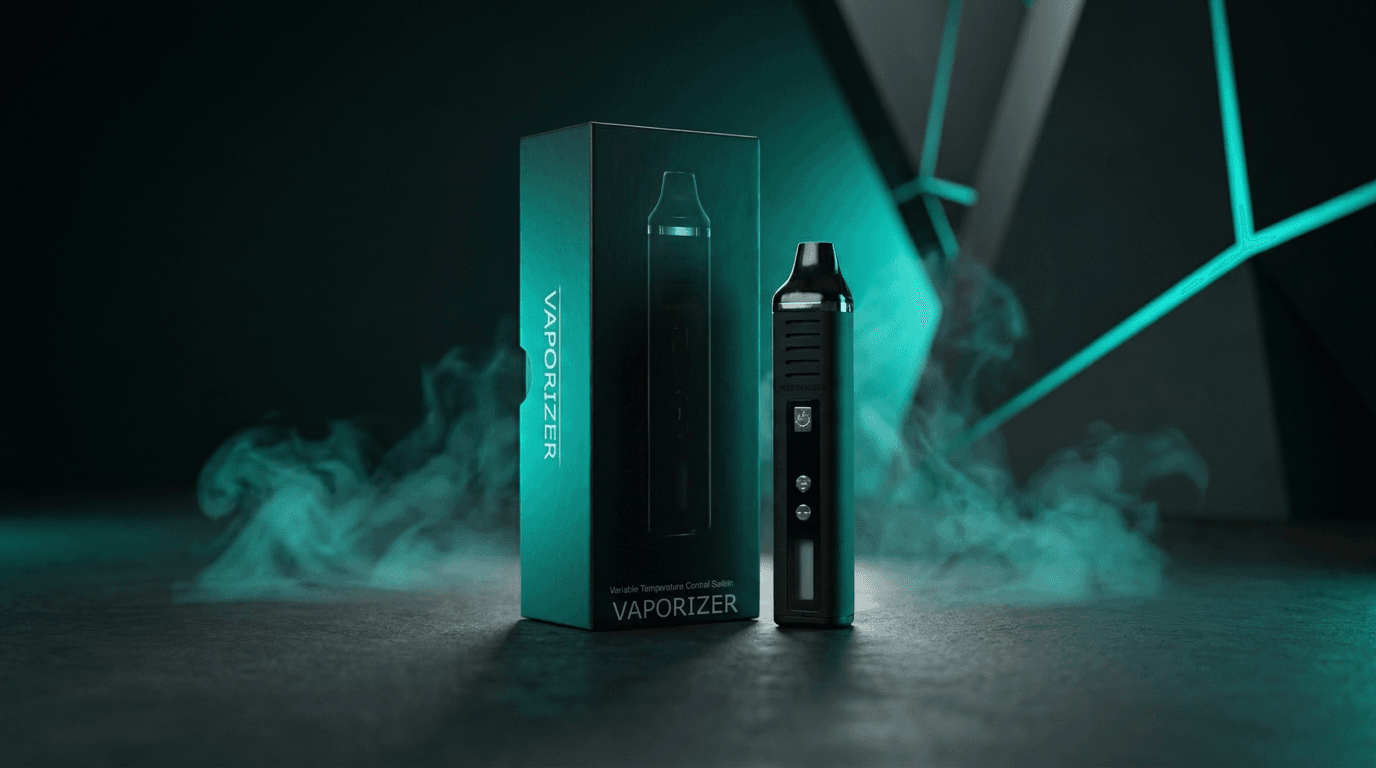
- Weedorizer Vaporizer: single-degree control from 93 to 220 °C, so every step above is a button press.
- Weedorizers Grinder: a 60 mm metal grinder for the even, fluffy grind vaporizers like.
- Super Silver Haze CBD: our page describes citrus zest, herbal pine and a bright lemon flavour, a good strain for noticing exactly where the citrus fades on your dial.
Want more strains to test? The full CBD range is this way. We strive to offer only products that are 100% legal throughout the EU, but rules differ between countries, and some restrict CBD flower in particular, so please check yours before ordering.
Hot questions, cool answers
What’s the best temperature for a dry herb vaporizer?
There’s no single best number. A common starting point is around 180 to 185 °C, which many users find balances flavour and vapour. Go lower for brighter taste and thinner vapour, higher for thicker clouds and a toastier flavour.
Why does my vapour taste burnt or like popcorn?
A burnt or popcorn-like taste often means the setting is a little high for that load, the herb is ground very fine, or the chamber needs a clean. Try dropping the temperature by about 10 °C, check the grind and wipe out the chamber before the next session.
Should I raise the temperature during a session?
You can. A common approach is to start low and raise the temperature in small steps (around 5 to 10 °C) as the flavour fades, so you get the brighter notes first and fuller vapour later from the same load.
How do I know when the herb in the chamber is finished?
The vapour turns thin and the taste goes flat and toasty even after you step the heat up. Spent herb typically ends up somewhere in the brown range. Very dark or black, ashy material is a sign the heat was higher than it needed to be.
More reading while the device heats up
- Vaporizer vs Vape: for anyone not sure which of the two they’re actually holding
- Vaporizers vs Smoking: the bigger comparison between the two methods
- CBD vs THC Effects: what each cannabinoid actually does
Temperature bands are practical starting points, not official standards. Boiling points from PubChem; studies cited as published. Information as of October 2026.