



The device is the easy bit. What goes in the chamber, where you switch it on and whether you drive afterwards are where German law gets interested.
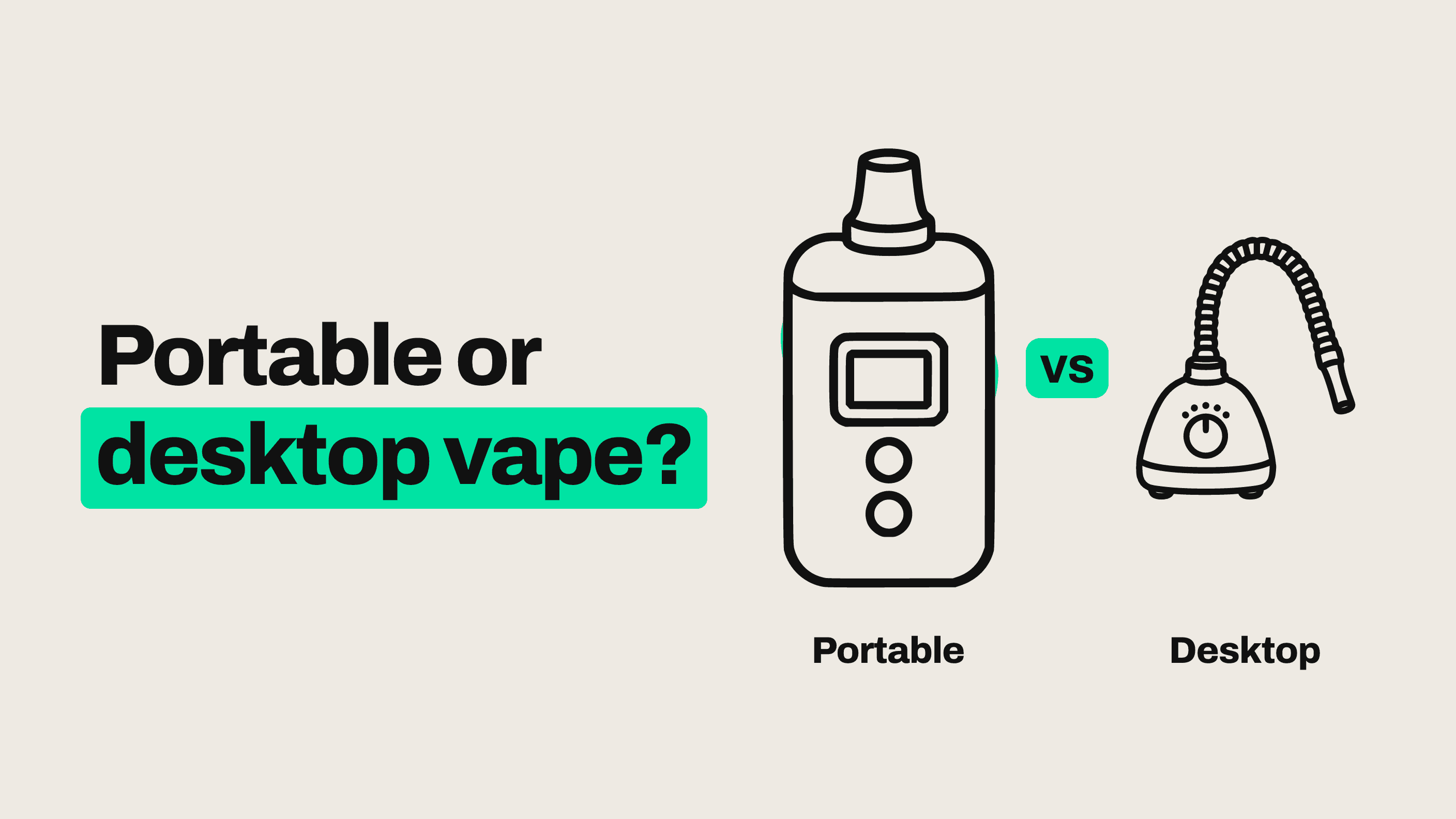
Picture it: the parcel arrives, you peel off the tape, and there it is. A sleek little heating chamber with a temperature dial, looking far too elegant to be the subject of a legal question.
And yet, somewhere between unboxing and first use, the thought arrives. Am I allowed to own this in Germany? Can I take it on the train? Will a customs officer in a high-vis vest want a word?
Relax. The short version is reassuringly boring, and boring is exactly what you want from the law.
This guide walks through what German law actually says about vaporizers, what it says about the stuff that goes inside them, and where you can and can't use one. It's written for adults 18+, it's general information rather than legal advice, and if you want to see the devices themselves first, our vaporizer range is one click away.
The short answer
- The device: as of October 2026, we know of no German federal rule that requires adults to hold a licence for, register or otherwise get permission to own or buy a vaporizer. The cannabis act (KCanG) regulates cannabis, not heating chambers. Youth-protection rules on selling vaping devices to minors are a separate matter.
- The contents: this is where the law lives. Cannabis, hemp, CBD and other cannabinoids sit under different, overlapping rules.
- The place: indoor bans on public transport, at railway stations and in federal buildings name vaporizing devices explicitly, and the KCanG adds its own no-go zones for cannabis.
- The road: never drive impaired. There's a THC limit for drivers, and zero tolerance at the wheel for under-21s and probationary drivers.
Need the right statute instead? Here's where to look, in ten seconds:
| If your question is about… | Look up |
|---|---|
| The device itself | EU product rules: CE marking, RoHS, the General Product Safety Regulation and the EU Batteries Regulation (no German rule specific to vaporizers that we know of) |
| What goes in the chamber | KCanG, NpSG, food and hemp rules |
| Where you switch it on | BNichtrSchG, KCanG §5, state non-smoking laws, house rules |
| Driving afterwards | StVG §24a and §24c |
Why the gadget itself is the easy part
Mechanically, a portable vaporizer is a battery, a heating element and a small chamber. It warms material to a set temperature, below the point where it would burn, so that it gives off vapour rather than smoke. It is, in the most unglamorous sense, a very specialized little oven.
Germany's Consumer Cannabis Act, the KCanG, came into force on 1 April 2024. It regulates cannabis: who may possess it, how much, where it may be grown, and where it may be consumed. Reading through it, you won't find a section licensing, banning or registering vaporizers as devices.
So as of October 2026, owning one, keeping one in a drawer or ordering one online isn't something the cannabis rules address. That's the good news, and it's genuinely good. Just don't stretch it further than it goes.
What the device rules do care about
EU product rules apply to the electronics: CE marking (for example under the EMC Directive), the RoHS limits on hazardous substances, the General Product Safety Regulation and the EU Batteries Regulation. Like any battery-powered electrical product sold in the EU, a vaporizer has to meet them. The two markings you'll most often see are:
- CE marking: the manufacturer's declaration that the product meets the EU requirements that apply to it.
- RoHS: compliance with the EU Restriction of Hazardous Substances directive (2011/65/EU), which limits substances such as lead and mercury in electrical and electronic equipment.
You may also spot an FCC mark. That one is American: it concerns radio-frequency interference under US rules. Nice to have, but it isn't an EU requirement.
CE and RoHS are about the device itself. Neither says anything about what you may legally put in the chamber. A CE mark on a kettle doesn't tell you what tea is allowed, either.
What goes inside is what the law reads
Here's where it stops being boring. Once a vaporizer is switched on, the question is no longer about the device, it's about the material in the chamber. Different materials sit under different rules, and the lines between them are finer than many shop listings suggest.
Cannabis under the KCanG
As of October 2026, Section 3 KCanG allows adults 18+ to possess up to 25 g of cannabis for personal use, and up to 50 g in total plus three living plants at their home or usual residence in Germany. The KCanG's consumption bans are worded for any consumption of cannabis and make no exception for vaporizing, so treat vaping exactly like smoking under the rules further down.
Hemp and CBD flowers
The KCanG handles "Nutzhanf" (industrial hemp) separately from cannabis, but the exemption comes with conditions, including that trade in it serves commercial or scientific purposes that rule out use for intoxication. That's why the status of hemp flowers sold to consumers remains contested in Germany.
We dug into the German-specific angle in our Cannabis Act explainer; the EU-wide CBD flower picture is in the reading list at the end.
Other cannabinoids and the NpSG
Semi-synthetic cannabinoids are a third story again. Germany's New Psychoactive Substances Act (NpSG) bans whole groups of compounds rather than single substances, and its list has been widened repeatedly since 2024, most recently in December 2025 and April 2026. Our NpSG list explainer keeps track of what's covered.
Our own range is put together with this in mind: we strive to offer only products that are 100% legal throughout the EU.
Where you can actually use it
Owning something and using it anywhere you like are two different freedoms. Your bicycle is yours, too, and you still can't ride it through the cathedral.
Public transport, stations and federal buildings
The Federal Non-Smokers Protection Act (BNichtrSchG) bans smoking tobacco and cannabis products, including e-cigarettes and devices for vaporizing tobacco and cannabis products. The ban applies inside federal buildings, on public passenger transport and in the enclosed areas of public railway passenger stations (designated smoking rooms excepted).
In practice that means no vaping on the ICE, S-Bahn or bus, or inside station buildings. The law names e-cigarettes and vaporizers as such, and rail operators' house rules ban vaping outside marked smoking areas, so a cheerful "but it's only CBD" is unlikely to help.
The KCanG no-go zones
For cannabis specifically, Section 5 KCanG adds its own consumption bans:
- In the immediate presence of anyone who has not yet turned 18, in public or private.
- In schools, children's playgrounds, children's and youth facilities and publicly accessible sports facilities, and within sight of them. Sight is taken to end once you are more than 100 metres from the entrance.
- In pedestrian zones between 7 am and 8 pm.
- On the premises of cultivation associations and within sight of them.
- In military areas of the Bundeswehr.
Yes, the lawmakers had to define "within sight" with a tape measure. We salute them.
Restaurants, workplaces and your landlord
Bars and restaurants are a matter for each federal state's non-smoking law, and those laws differ. At work, workplace health and safety rules and the employer's own policy apply, and landlords, hotels and venue owners can set stricter house rules. The safe assumption: if you couldn't light a cigarette there, don't switch on a vaporizer there either.
Travelling with a vaporizer
The device in your bag is rarely the issue. What travels in it, or next to it, can be.
- Empty and clean is easiest. A device with residue in the chamber invites questions you may not enjoy answering.
- Check the rules where you are going. Neighbouring countries handle cannabis, hemp and cannabinoids very differently. Our Austria vape guide is a good example of how much a border changes.
- Flying? Vaporizers and spare lithium batteries must go in your hand luggage, never the hold, and must not be charged on board. Check your airline's dangerous-goods rules before you fly.
One more, and it catches people out: Germany's cannabis rules cover possession inside Germany only. Taking cannabis into or out of Germany is prohibited under the KCanG (§2), and the destination country's own laws apply on top, so don't improvise there.
The road: not a grey area
No jokes in this section, because this is the one that can hurt someone.
Under Section 24a of the Road Traffic Act (StVG), driving with 3.5 ng/ml of THC or more in blood serum is an administrative offence, with fines of up to €3,000, or up to €5,000 when combined with alcohol. Drivers under 21 and those still in their probationary period must not consume THC while driving or start a drive while under its effect (Section 24c StVG). The threshold applied for them is very low, so for them the only safe approach is no cannabis before driving.
Blood levels don't follow a neat clock, so there's no safe "wait X hours" rule we can give you. If you plan to vaporize, plan not to drive.
A sensible checklist before you press the button
- You're 18 or over, and so is everyone around you.
- You know what's in the chamber and what rules apply to it where you are.
- You're not on public transport, in a station or in any of the KCanG zones.
- The house rules allow it, whether that's your landlord, the hotel or your flatmate.
- You're not driving afterwards.
- You've read the product page, and you're starting low and going slow.
If all six are ticks, the law has very little left to say.
The vaporizer shelf
If you made it past the tape-measure clause, you've earned a look at the hardware. Three things from our shop that fit this guide:
- Weedorizer Vaporizer: our own dry-herb device, the very specialized little oven from earlier.
- Weedorizers Grinder: for the even grind the chamber prefers.
- Woody: for the cartridge side of life.
Specs and markings are on each product page. Rules differ between countries, so please check yours before ordering.
Vaporizer law, answered
Do I need a licence or a prescription to buy a vaporizer in Germany?
As of October 2026, we know of no German federal rule that requires adults to hold a licence for, register or otherwise get permission to buy or own the device itself. The German cannabis rules (KCanG) deal with cannabis: possession, cultivation and where it may be consumed, not with heating gadgets. No prescription is needed for the device either. Youth-protection rules on selling vaping devices to minors are a separate matter. What you put in the chamber is what the law looks at.
Can I use a vaporizer on a German train or at the station?
Not indoors. The Federal Non-Smokers Protection Act (BNichtrSchG) explicitly covers devices that vaporize tobacco and cannabis products, and it applies on public transport and in the enclosed areas of passenger railway stations, as well as federal buildings. Rail operators' house rules also ban vaping outside marked smoking areas, so wait until you're out of the station and away from the restricted areas, or in a marked smoking area.
Where does the KCanG ban cannabis consumption?
Section 5 KCanG bans it in the immediate presence of anyone who has not yet turned 18 (in private too), in and within sight of schools, playgrounds, children's and youth facilities and public sports facilities (sight is taken to end beyond 100 metres from the entrance), in pedestrian zones between 7 am and 8 pm, near cultivation associations and in military areas. The bans make no exception for vaporizing, so treat it exactly like smoking.
Can I drive after using a vaporizer?
Don't drive while impaired, full stop. Germany's road traffic act sets a THC limit of 3.5 ng/ml in blood serum for drivers, and drivers under 21 or in their probationary period face zero tolerance: no THC at the wheel and no starting a drive while under its effect. Leave the car at home and plan the evening around that.
Is a CE mark on a vaporizer the same as permission to vaporize anything?
No. CE and RoHS markings are about the device itself: CE means the manufacturer declares it meets the EU rules that apply to it (for example electrical safety and electromagnetic compatibility), and RoHS limits hazardous substances in its electronic components. Neither says anything about whether a particular herb, bud or cannabinoid may be put inside, which is a separate set of rules that also differs between countries.
More reading before you pack
Legal position as of October 2026, based on the KCanG, BNichtrSchG and StVG as published (unofficially consolidated) on gesetze-im-internet.de. Laws change and state rules vary; this is general information, not legal advice.