
Your battery says 510, your cartridge says 510, and neither explains itself. Here’s what fits, what to set and what to do when it blinks.
Somewhere in your drawer there’s a small, slightly mysterious stick with a button on it. Next to it, a cartridge from a completely different brand. Both say “510”. Neither says what that means.
Good news: it’s simpler than it looks. It’s mostly a thread, a pin and a bit of airflow. No secret society, no maths exam.
By the end you’ll know what “510” really promises, what actually screws together, whether magnetic is worth it, how to set up a new battery and how to calm one down when it starts blinking at you. Along the way you’ll meet our two 510 batteries, Woody and Blinkertone, plus the refillable 510 cartridges in our accessories. Everything here is for adults 18+.
The short answer, in ten seconds
| Your question | The short answer | One thing to know |
|---|---|---|
| What is “510”? | A widely used, informal screw-thread connection between battery and cartridge | It tells you about fit, not brand or quality |
| Will my cartridge fit? | If both parts say 510, they’ll almost always fit together and connect | Width, draw and best voltage can still differ |
| Magnetic or screw-on? | Magnetic is quicker to swap, screw-on needs no extra part | Many magnetic batteries come with a small adapter ring |
| Which voltage? | Start low, step up only if the draw feels thin | Too high can taste harsh or burnt |
| It stopped working | Charge, reseat, wipe the contacts, rest it | Never force or open the device |
What “510” actually means
“510” is the name of a connection, not a product. It’s a widely used, informal convention: a small, fine screw thread with an insulated contact pin in the middle, used to join a battery to a cartridge.
Where the name comes from is one of the vaping world’s minor debates. It’s often linked to an early e-cigarette model or to the thread’s dimensions, and no official standards body defines “510”, so we won’t pretend to settle it. What matters is that it caught on early, no single company controls it, and it’s simple and inexpensive to make, so almost everyone uses it.
Think of it like a light-bulb socket. The socket tells you what screws in. It tells you nothing about how bright the bulb is, how long it lasts or what it costs. A “510” sticker is exactly that kind of promise: it’ll almost certainly fit. Everything else is up to the battery and the cartridge.
How a battery and a cartridge talk to each other
Every 510 connection has three jobs, and it does them with very few parts:
- The thread holds the two pieces together. Screw it on until it’s snug, then stop. “Snug” is the goal, “welded” isn’t.
- The centre pin is an insulated contact in the middle. The pin and the threaded body together carry power from the battery to the cartridge’s heating element. If the pin and the cartridge base don’t touch, nothing happens.
- The airflow path lets air travel through the cartridge and up to the mouthpiece when you draw.
That division of labour is the whole trick. The battery supplies power, and the cartridge holds the liquid and the heating coil. As long as the thread and pin line up, the two don’t need to know much else about each other, which is why the convention works across so many brands.
It also explains why a “510 battery” is just hardware. It can’t change the liquid’s ingredients, but its voltage setting does decide how hot the coil runs, and so how the vapour tastes.
What actually fits (and what “fits” doesn’t promise)
“510 compatible” answers one question: will it screw on and make contact? Almost always, yes. But a few practical things can still trip you up:
- Width. Some cartridges are wider than the top of the battery. They still screw on, but they may sit awkwardly, or not fit at all into batteries that hide the cartridge in a recessed or enclosed top, so check the cartridge’s diameter if your battery has one.
- Draw and airflow. Two cartridges can fit the same battery perfectly and still feel very different to draw from.
- Voltage. A setting that suits one cartridge may taste harsh on another. That’s why adjustable batteries exist.
- Not every device is 510. Some use other connection standards, and many pens are sealed all-in-one units with no thread at all. If it doesn’t say 510, don’t force it.
So treat “will it fit?” and “will I like it?” as two separate questions. The first one is answered by the label. The second one is answered by the product page, and occasionally by trial and gentle error.
Refillable 510 cartridges: the reusable route
Prefilled cartridges are the easy option: screw on, use, replace, repeat. A refillable 510 cartridge flips that. It arrives empty, you fill it with a liquid of your choice, and when it runs dry you fill it again.
It needs a 510 battery to work, the same as any other cartridge.
Magnetic or screw-on: pick your ritual
Screw-on is the classic. You twist the cartridge straight onto the battery’s thread. Nothing extra to lose, works with any 510 cartridge, and the one thing to learn is a light touch.
Magnetic batteries skip the twisting. Underneath it’s still the same 510 idea, but the cartridge snaps into place. Many magnetic 510 batteries come with a small adapter ring. You screw it onto the cartridge once, and the battery’s magnet then holds the ring in place.
Which is better? Neither, really. Magnetic suits you if you swap cartridges often and like a satisfying click. Screw-on suits you if you’d rather not keep track of a ring the size of a lentil. If a magnetic battery arrives with adapters, keep the spares somewhere they won’t be vacuumed up.
What to look for in a 510 battery
There’s no single “best” battery, only the one that fits how you actually use it. These are the features worth comparing:
| Feature | Why it matters |
|---|---|
| Adjustable voltage | Lets you match the output to the cartridge, so a harsh or thin draw can be fixed without swapping hardware. |
| Preheat | A short warm-up before you draw; handy with thick liquids. |
| Battery indicator | Saves you from the battery going quiet halfway through the evening. |
| Charging port | USB-C means one less cable in the drawer of mystery cables. |
| Connection type | Magnetic for quick swaps, screw-on for zero extra parts. |
| Shape and size | Slim and pen-shaped slips into a jeans pocket; chunkier is easier to grip but rides heavier in a jacket. |
If the battery’s page doesn’t mention a feature, assume it isn’t there. Batteries rarely hide their talents out of modesty.
Setting up your battery for the first time
Unboxing day. Resist the urge to do everything at once.
- Charge it first. A full first charge saves you from wondering whether a weak draw is the battery or the cartridge.
- Attach the cartridge gently. Turn it until it stops, or let the magnet do its thing. On a threaded connection, overtightening can wear the thread or push the battery’s centre pin down so it stops making good contact.
- Start on the lowest setting. If your battery has voltage settings, begin low. You can always go up; you can’t un-taste a burnt puff.
- Use preheat if your battery has it and the liquid is thick. A short warm-up beats a hard pull.
- Draw slow and steady. Gentle, even draws work better than one heroic lungful.
- Same rule for what’s inside: start low, go slow, read the product page.
Now the one bit we won’t joke about: nothing that affects you belongs behind the wheel. Driving waits.
When it sulks: common 510 problems
Most 510 drama has a dull explanation. Work through these before you declare the battery dead:
- Nothing happens. Charge it. Then check the cartridge is seated and the centre pin is clean. A dry cotton bud on the contacts often does wonders.
- Blinking lights. Often a low charge, a cartridge that isn’t making good contact, or a button lock if your battery has one. Blink codes differ, so check your battery’s own instructions.
- Weak or thin vapour. Low charge, a setting that’s too low, or a cartridge near its end. Try a step up in voltage before blaming anything.
- Burnt taste. Often a setting that’s too high, puffs that are too long and close together, or a cartridge that’s nearly empty. Drop a setting and give it a minute.
- Tight draw in the cold. Thick liquids get thicker in the cold. Warm the device in your hand or an inside pocket, then use preheat, if there is one. Never a heater, hairdryer, microwave or flame.
- Leaking or sticky threads. Storing cartridges upright, not overtightening them and wiping the thread with a dry tissue can help keep leaks and sticky threads in check.
And a few rules that stay serious even when the battery doesn’t: never take a battery apart, poke the pin with metal or keep using a device that gets hot, swells or smells odd. Stop, unplug it and contact the shop you bought it from. When a battery finally retires, take it to a battery or electronics collection point rather than the household bin.
The 510 starter shelf
If you’d rather skip the matching game and get a battery and cartridges in one go, these sets do the pairing for you:
- Woody Pack: the Woody battery, two Trippy 1ml 510 cartridges and a pack of ten Happy Stones.
- Blinkertone bundle: the dual-cartridge Blinkertone with two Trippy 1ml cartridges plus two more 1ml cartridges.
- Aroma Liquid Refill: a Woody battery, two refillable 510 cartridges, two 10ml Aroma Liquid refills and 10x Super Silver Haze Broad Spectrum.
Each product page lists exactly what’s inside, and that’s the part that matters: a 510 battery is only a heating-and-power gadget, so whether a cartridge suits you, and whether it’s allowed where you live, depends mostly on what’s in it, though some countries regulate vape devices too. We strive to offer only products that are 100% legal throughout the EU, but rules differ between countries, so please check yours before ordering. Our explainer on THC alternatives in the EU is a good starting point.
510 questions, answered
Will any 510 cartridge fit any 510 battery?
Almost always, physically: the thread is a shared convention, so a 510 cartridge connects to a 510 battery whatever the brand. Very wide cartridges, recessed battery tops or a centre pin that doesn’t touch can still get in the way, and the draw and the best voltage differ from cartridge to cartridge, so check both product pages before you buy.
What voltage should I use on a 510 battery?
Start on the lowest setting and only step up if the draw feels thin. Higher voltage heats the coil more, which usually means more vapour but can taste harsh or burnt, especially on a cartridge that’s running dry. Lower settings run cooler and tend to taste gentler. If the cartridge page names a battery or setting, follow that.
Why is my 510 battery blinking?
On many batteries a blinking light can signal a low charge, a cartridge that isn’t making good contact or a button lock, if yours has one. Charge it, reseat the cartridge gently and check your battery’s own instructions, because blink codes differ between devices.
Can I take a 510 battery on a plane?
Usually yes, in your hand luggage: EASA guidance says e-cigarettes and spare lithium batteries aren’t permitted in checked baggage, should travel with you in the cabin, must be protected from accidental activation and can’t be charged during the flight. Rules on what’s inside the cartridge differ between countries, so check every country on your route and your airline’s rules before you fly.
More reading
- Portable Vape Battery for Everyday Use
- Trippy vs regular cartridges, compared
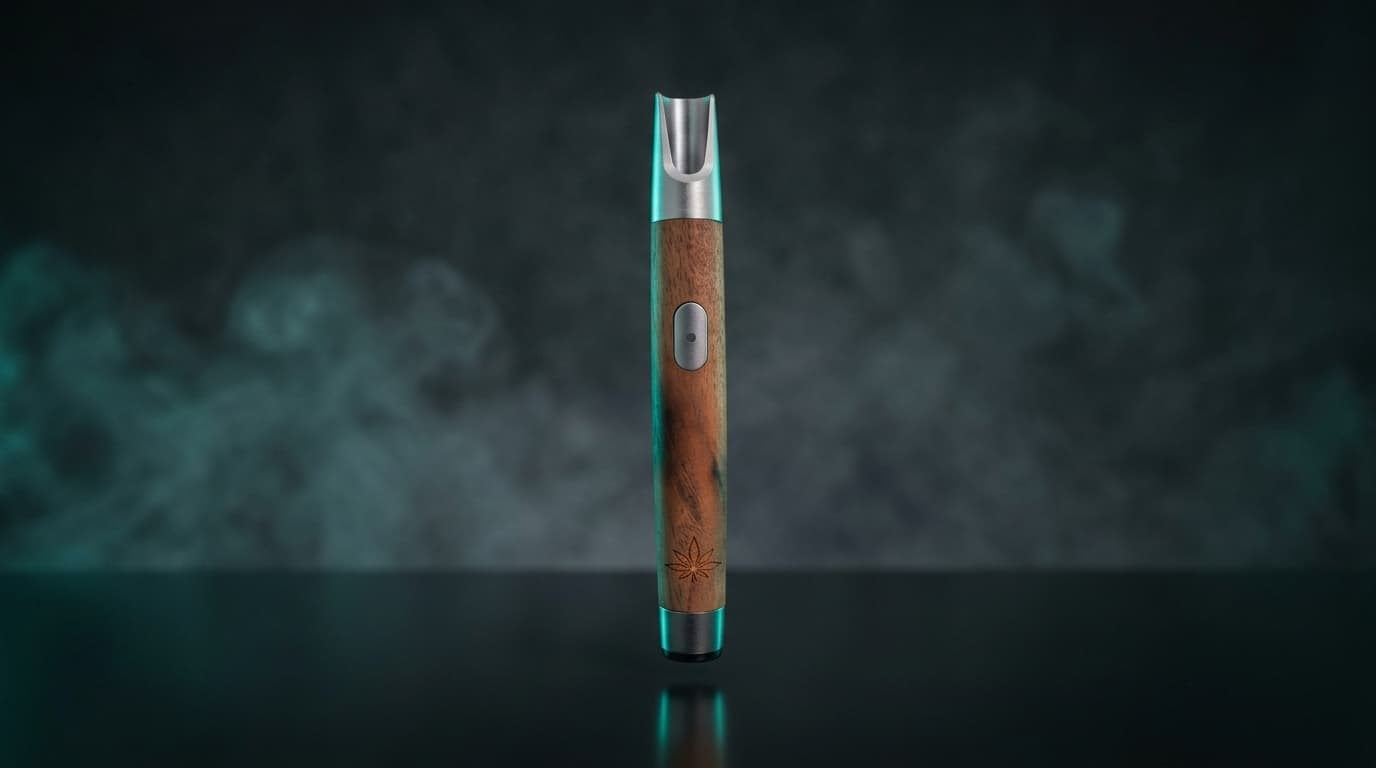
- Woody, our wooden 510 battery, up close
Product details as listed on our product pages on 17 October 2026. Air-travel guidance from EASA Safety Information Bulletin 2025-03; check your airline’s current rules before you fly.