A new HHC cousin, a rewritten annex and a lot of forum panic. Here is what Germany's December 2025 change actually says, minus the chemistry exam.
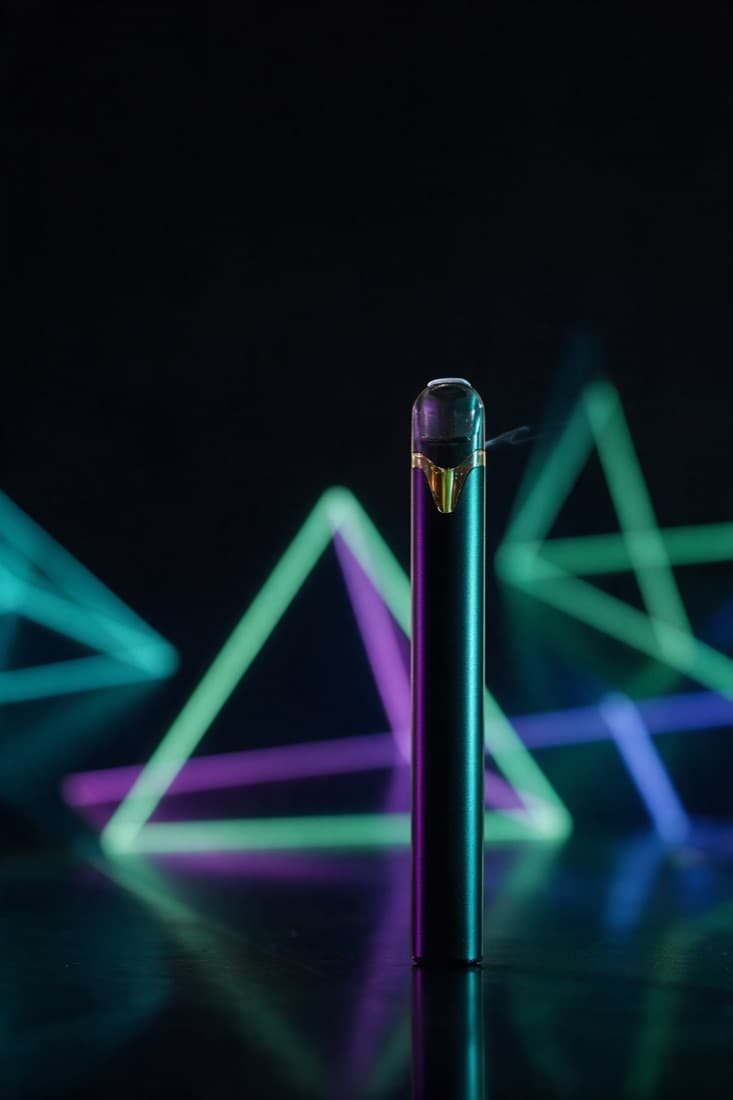
Maybe there is a vape cartridge in a drawer somewhere that you bought in 2025. The label says 10-OH-HHC in letters that looked perfectly reasonable at the time.
Then the headlines arrived, the forum threads multiplied, and everyone suddenly became an amateur chemist with very strong opinions about hydroxyl groups.
Skip the forum. The paperwork is duller, but it has one big advantage: it is true.
This guide covers what 10-OH-HHC is, what Germany changed in December 2025, what the law actually says (and does not say), and how to check anything you buy from here on. It is written for adults 18+ and it is general information, not legal advice. For the wider picture on HHC itself, see our guide to HHC in Germany, and the reading list at the end goes deeper. If you want to see what we stock instead, browse our THC alternatives range.
The short version in ten seconds
| Question | Answer as of October 2026 |
|---|---|
| What changed? | Germany's NpSG annex was rewritten by the Sixth Regulation amending the NpSG annex, in force since 2 December 2025 |
| Is 10-OH-HHC named in it? | No. The HHC-type group was widened to hydroxylated and halogenated derivatives, which is how it is caught |
| What does the NpSG forbid? | Trading, placing on the market, manufacturing, importing, exporting, acquiring, possessing and administering listed substances |
| Does it apply EU-wide? | No. It is German national law; other countries set their own rules |
| What should you do? | Don't buy it for Germany, don't pass on what you have, and check labels on anything new |
What 10-OH-HHC actually is
10-OH-HHC is short for 10-hydroxy-hexahydrocannabinol. Strip away the syllables and it is HHC with an extra hydroxyl group (an oxygen and a hydrogen) bolted onto one of its rings.
HHC itself is a semi-synthetic cannabinoid: it does not turn up in hemp in any useful amount, so it is made in a lab from other cannabinoids. 10-OH-HHC is one more step down that same road, a close chemical cousin rather than a new family.
That family resemblance is the whole story. When Germany listed HHC in 2024, a hydroxylated version that sat just outside the old wording was, from a seller's point of view, a very convenient cousin to have.
How Germany's NpSG works: groups, not names
Most drug laws work like a guest list: a substance is controlled if its name is on it. Germany's narcotics act (BtMG) works that way.
The Neue-psychoaktive-Stoffe-Gesetz (NpSG, the New Psychoactive Substances Act) works more like a dress code. Its annex describes whole groups of compounds by their chemical structure: a core skeleton, plus a list of the atoms and side groups that may be attached to it. Anything that fits the description and stays under a set molecular mass is in.
The upside for regulators is that a tiny tweak to a molecule no longer creates a brand-new, unregulated product overnight. The downside is that the descriptions read like an organic chemistry exam, which is why so many people misread them.
HHC-type compounds live in group 2.3 of the annex: compounds derived from 6H-benzo[c]chromen-1-ol, which is the chemical skeleton shared by THC, HHC and their relatives.
The timeline: from HHC to 10-OH-HHC
- June 2024: the Fifth Regulation amending the NpSG annex (21 June 2024) adds a cannabinoid subgroup, No. 2.3, for HHC-type compounds, and HHC and closely related compounds become NpSG substances.
- After the 2024 change: new variants appear on the market, hydroxylated HHC derivatives such as 10-OH-HHC among them, that fall outside the 2024 group definition.
- October 2025: the government sends the Sixth Regulation to the Bundesrat as printed paper 534/25.
- 21 November 2025: the Bundesrat approves it.
- 26 November 2025: the Federal Ministry of Health signs the regulation.
- 1 December 2025: it is published in the Federal Law Gazette (BGBl. 2025 I No. 292).
- 2 December 2025: it comes into force, the day after publication, with no transition period.
So when people say "the December 2025 ban", this is the regulation they mean. And no, there was no grace period, not even a polite reminder letter.
What the regulation actually says (and doesn't)
Here is a detail that is easy to miss: the regulation never mentions 10-OH-HHC by name. It does not need to.
Instead, it replaces the whole NpSG annex with a new version. For the HHC-type group, the explanatory notes say the definition is extended to halogenated and hydroxylated derivatives on ring A (as the annex labels it). The notes give seizures by the authorities as the reason. That extension is what brings 10-OH-HHC and similar hydroxylated variants into the group.
The same rewrite also widens another part of the definition so that THCA-A and its esters are covered as prodrugs of THC. And it adds two entirely new groups outside the cannabinoid world, both for dangerous synthetic opioids. This was a broad clean-up, not a single-molecule crackdown.
The notes are unusually frank about why: they say actors on the drug market had once again broken through the limits of the group definitions with targeted changes. In plain English, a game of chemical whack-a-mole, and the mallet got bigger.
What the NpSG prohibits
Once a compound falls inside a group, section 3 NpSG applies. The short list of things not to do is, unhelpfully, most things. In summary, it prohibits:
- trading in it and placing it on the market;
- manufacturing it, and bringing it into or out of Germany;
- acquiring it, possessing it, and administering it to someone else.
There are narrow exceptions for recognised scientific, industrial and official uses. Authorities can seize and destroy the substance.
The criminal penalties in section 4 are aimed at the supply side: trading, placing on the market and administering, plus manufacturing or importing for sale. The basic offence carries up to three years' imprisonment or a fine. Commercial or gang-based dealing, and supply to a minor by a person over 21, are aggravated offences carrying one to ten years' imprisonment.
Possession on its own is still prohibited by section 3, even though the section 4 penalties focus on supply. Seizure is a real possibility, and that is not a loophole worth testing.
Germany is not the whole EU
The NpSG is German national law. It does not automatically change anything in Austria, Italy, Croatia or anywhere else.
Each country keeps its own lists and its own approach, and they move at different speeds. Something sold openly in one member state can be listed next door, and the reverse.
We have written about how this plays out in Austria, for one example. Wherever you are, check the current rules where you live before ordering, because a blog post (even a well-researched one) has a shelf life.
If you still have some
No panic required, just a bit of common sense:
- Check what you actually have. Not every product with HHC-style branding contains 10-OH-HHC; the packaging or lab report will say.
- Don't pass it on. Selling, giving away or sharing a listed substance is exactly what section 4 targets. Supplying a minor can be an aggravated offence.
- Don't travel with it. Carrying it across a border adds import and export to the list of problems.
- Don't reorder it. A shop abroad doesn't help: importing is on the section 3 list too.
- Ask if unsure. For your own circumstances, a lawyer is the right person, not a comment section.
How to check anything you buy from now on
The 10-OH-HHC story will not be the last of its kind. A few habits make the next headline far less stressful:
- Named ingredients. Be wary of a product that only lists a fashionable new abbreviation. A new molecule built to dodge a definition is exactly what the 2025 regulation was written to catch.
- Lab results. Our FAQ says every batch is tested by an independent laboratory, and our product pages say test results are available on request. Whoever you buy from, ask, and expect a straight answer.
- Country notes. A responsible shop tells you that rules differ by country and asks you to check yours. If a seller promises the same answer for every country, with no caveat, be suspicious.
- Date stamps. Legal guides age fast. Look for an "as of" date and prefer primary sources such as the law itself.
- Common sense. Adults 18+ only, start low, go slow, and read the product page before anything else. And never drive after using any psychoactive product.
Your post-headline shelf
If the headline has you rethinking your shelf, here are two places to start (specs as listed on each product page):
- Super Silver Haze Broad Spectrum: 1 g of hemp buds with citrus zest, herbal pine and classic Haze notes, less than 0.2% THC.
- CBD Drops: 40% CBD (4,000 mg) in a 10 ml bottle with organic coconut oil. A full-spectrum blend with multiple cannabinoids and terpenes, and less than 0.2% THC.
We strive to offer only products that are 100% legal throughout the EU, but rules differ between countries, so please check yours before ordering. Each product page gives its main specifications, and our FAQ explains how our products are tested.
10-OH-HHC, answered
Is 10-OH-HHC banned in Germany?
As of October 2026, yes in effect: since 2 December 2025, 10-OH-HHC falls under the HHC-type group of the Neue-psychoaktive-Stoffe-Gesetz (NpSG). It is not named in the Sixth Regulation, but is caught by the widened group definition.
Is it a crime to own 10-OH-HHC in Germany?
The NpSG prohibits possession alongside trading, manufacturing, importing and acquiring, and the authorities can seize the substance. The law's criminal penalties are aimed at trading, placing on the market, administering, and manufacturing or importing for sale. Possession is prohibited and can lead to seizure, even though the criminal penalties focus on supply. For your own situation, ask a lawyer.
Does the German rule apply in other EU countries?
No. The NpSG is German national law. Other countries keep their own lists and approaches, and they change over time, so check the current rules where you live before ordering anything.
Can I order 10-OH-HHC from a shop in another country?
Not to a German address. 10-OH-HHC falls under the widened HHC group, and the law lists importing among the prohibited acts. A foreign web address does not change that.
Why do new HHC variants keep appearing and then getting banned?
Germany's NpSG bans whole groups of compounds by their chemical structure. When sellers tweak a molecule just outside a group definition, the government updates the definition. The 2025 regulation says openly that it responds to the market deliberately breaching the limits of the old definitions.
More reading
- Is HHC Legal in Germany? The 2026 Legal Status Explained
- Legal Cannabinoids 2026: The Complete List Under Germany's NpSG
- HHC Alternatives 2026: Which Legal Options Actually Exist
- What Can You Buy Under Germany's Cannabis Act?
Legal position as of October 2026, based on the consolidated NpSG (last amended by the law of 7 January 2026), the Sixth Regulation (BGBl. 2025 I No. 292) and its explanatory notes in Bundesrat printed paper 534/25. General information, not legal advice; rules change, so please check the current version.