

One button, one oil window, no manual needed. Here's how to charge, puff, store and finally retire your Penjamin 3.0 without overthinking any of it.
The parcel has arrived. It's small, plain and surprisingly light, and inside sits a pen that looks like it should be signing a contract rather than starting your evening.
You turn it over. There's a little window, a little screen and one button. No manual the size of a phone book, no flat-pack diagram with a smiling stick figure. Just you and the pen, sizing each other up.
Good news: there's very little to get wrong. Better news: the few things that do matter are easy once somebody tells you.
This guide walks you through a Penjamin from unboxing to the very last drop: charging, the first puff, how long a draw should be, storing it between evenings and what to do when it's empty, including the refillable Penjamin ECO route. If you're still wondering what a Penjamin actually is, start with our explainer and come back. Everything here is for adults 18+.
Your Penjamin in ten seconds
| Step | What to do | One thing to know |
|---|---|---|
| Unbox | Check the oil window and the display | The 3.0 comes pre-filled; the USB-C cable isn't included |
| Charge | Plug in a USB-C cable | The display shows the battery level |
| First puff | Just inhale; no button needed | The button sets the voltage |
| Each draw | Take short, gentle draws | Start low, go slow, read the product page |
| Storing | Somewhere cool, dry and out of reach of children and pets | Hot cars aren't a storage solution |
| Empty | Check the oil window and the taste | Electronics collection, not the kitchen bin |
| The ECO route | Keep a Penjamin ECO, swap the refill | The refill fits the ECO device |
1. Out of the box: what you're holding
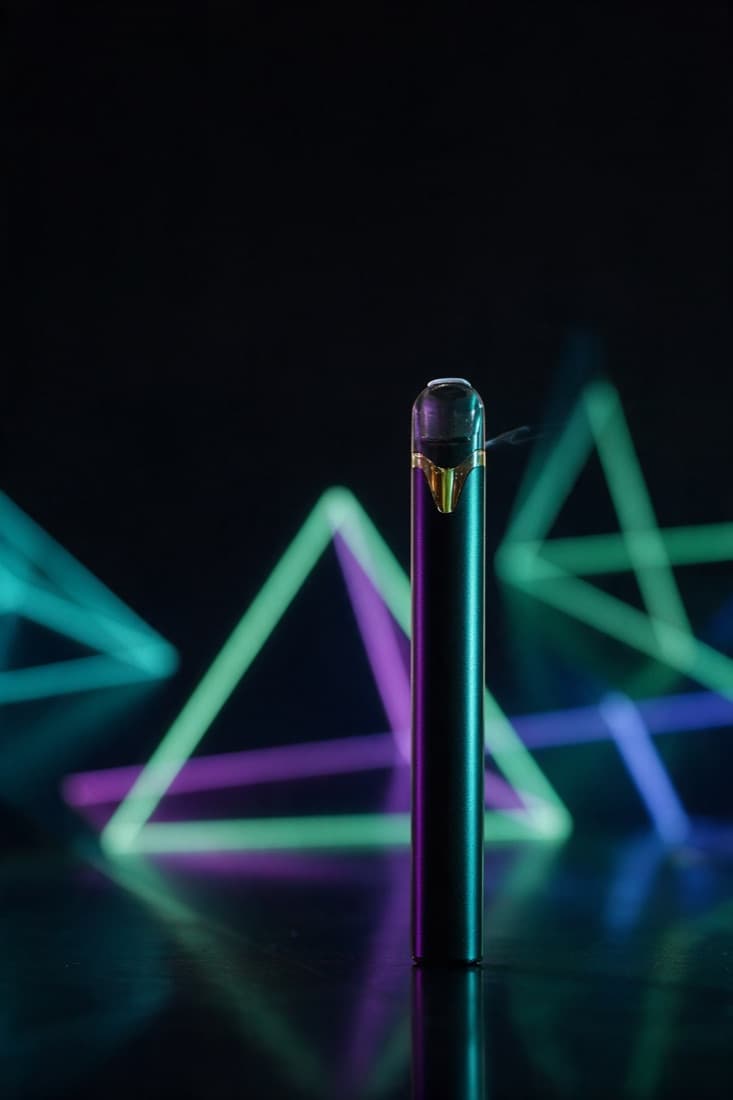
Our best seller, the Penjamin 3.0, comes as one pen, pre-filled and ready to use. It holds 1 ml of oil and has a 280 mAh battery.
Before you do anything else, have a quick look at three things:
- The oil window. This is where you see what is left. On day one you should see plenty of oil in the window, a warm amber colour like a tiny, well-behaved jar of honey.
- The display. It shows battery, voltage and puffs, so you always know where you are.
- The button. On the 3.0 it sets your voltage. You don't need it to take a puff: the pen is draw-activated. (And no, it isn't a self-destruct button, however dramatic it looks.)
One thing you won't find in the box is a cable. The 3.0 charges over USB-C, and the cable isn't included. If your phone uses USB-C, you already own the right one; if not, it's worth sorting before the pen arrives.
2. Charging without the drama
Plug a USB-C cable into the pen and a power source you'd happily charge your phone from. That's genuinely the whole procedure.
The display shows the battery level, so you don't have to guess. The product page doesn't give a charging time, so the honest advice is: charge until the battery display shows full, and get into the habit of topping up before the battery runs flat rather than after.
None of this is Penjamin-specific; it's the same common sense as for any small lithium-battery gadget:
- Charge it on a hard, non-flammable surface where you can keep an eye on it, not under a pillow, buried in a bag or overnight.
- Use a cable and plug in decent condition. A frayed cable held together with hope isn't a charger.
- Unplug it once it's full.
- If it gets hot, swells or smells odd while charging, unplug it and stop using it. Then get in touch with our support team.
Using an older pen? The Penjamin 2.1 has a battery level indicator too, so the same "charge before it's empty" rule applies.
3. The first puff
Here's the part people overthink. The Penjamin 3.0 is draw-activated: you don't press anything to fire it. You just put it to your lips and inhale.
For the very first puff:
- Check the display has some charge.
- Glance at the voltage. If you're new to vape pens, a lower setting is the gentler place to begin; on most pens, lower voltage means a lighter, cooler draw.
- Take one slow, gentle draw.
- Then put the pen down and give yourself time to see how it feels before you decide on another.
That last step is the important one. People respond differently, and what one person finds mild another may not, so the first time is about finding out how it feels for you. The rule is short enough to fit on the pen itself: start low, go slow, and read the product page. Your first evening is a getting-to-know-you session, not a speed record.
And the obvious one, said plainly: do not drive or operate machinery after using it, and wait until any effects have fully worn off.
4. How long should a draw be?
There's no stopwatch built into the pen, but there's a useful clue on its product page: a Penjamin 3.0 usually gives 250 to 400 puffs, depending on how long you draw and the voltage you use.
In other words, the same 1 ml can feel like a long-running series or a short miniseries, depending entirely on you.
- A gentle, steady draw of a couple of seconds is a comfortable place to start, and the pen lasts longer that way.
- Longer draws and higher voltage settings tend to use more oil per puff and can make the taste harsher, even burnt. If that happens, ease off and give the pen a short break.
- Adjust the voltage in small steps rather than jumping straight to the top setting.
The puff counter is handy here. Use it as your own little diary: if you note roughly how many puffs suit your evening, you're never guessing.
5. Carrying and storing it between evenings
A Penjamin is pocket-sized, which is half its charm and half its risk: pockets are where small things go to be sat on, washed or forgotten in a coat until March.
A few habits keep it happy:
- Keep it out of the heat. A dashboard in summer, a sunny windowsill or a spot next to the radiator are all poor choices.
- Don't leave it in the freezing cold either. Cold oil gets thicker, and a sluggish draw on a winter evening is often just a chilly pen. Let it come up to room temperature on its own; never use a hairdryer or heater.
- Keep it dry. Rain, drinks and washing machines are all bad news for electronics.
- Keep it out of reach of children and pets, and away from anyone who isn't an adult. Ours are adults-only products.
If you're flying: under international air-safety rules, vape pens with batteries go in your hand luggage only, never in checked bags, and may not be charged on board. Airlines can add their own rules on top. What's allowed inside a pen also differs from country to country, so check the rules for every country on your route and your airline before you pack it.
6. When is it empty?
Every good series has a finale, and yours is easy to spot:
- The oil window. This is the clearest sign: if no oil is left to see, it's done.
- The puff counter. A count heading towards the usual 250 to 400 is a hint too.
- The taste. A flat or dry taste usually means the oil has run out.
If the pen is charged and you can still see oil but it won't draw, it's probably not empty. Let it rest or warm up if it has been cold, and contact our support team if it still won't work.
When it really is empty, stop there. Chasing the last wisp with ever longer drags mostly gets you a burnt taste and a frown. Treat empty as the end of that pen's working life and move on to the next one.
7. The ECO route: keep the device, swap the refill
If throwing a whole pen away at the end of every run feels a bit wasteful, the ECO system is the alternative.
The Penjamin ECO is a reusable device made for Penjamin ECO refill cartridges. It has a rechargeable battery, a puff counter display, adjustable voltage settings, a preheat function for smooth starts and a leak-proof cartridge connection.
The REFILL Penjamin ECO is the cartridge that goes in it: you keep the battery and replace the cartridge, and it carries the same liquid as the 3.0.
So the ECO routine looks like this:
- Charge the ECO device.
- Insert a refill cartridge.
- Choose your voltage; use the preheat for a smooth start if you like.
- When the refill is finished, swap in a fresh one. The device stays.
Your drawer also stops looking like a museum of empty pens.
8. The last drop: recycling it properly
An empty pen still contains a battery, which means it doesn't belong in the kitchen bin with the yoghurt pots. Do not try to remove the battery yourself.
The EU Batteries Regulation (EU) 2023/1542 requires end users to discard waste batteries separately from other waste, including mixed municipal (household) waste. In practice that means an electronics (WEEE) collection point, or a battery or vape take-back point that accepts devices.
Shops that sell batteries or electronics often have a collection point, but what they accept, and where you can drop off small devices, differs from town to town and country to country, so check your local rules. And if you've switched to the ECO system, the same applies to the device itself when it eventually retires: it has a rechargeable battery, so it goes to electronics collection too.
It takes about as much effort as remembering your shopping bags, and slightly less than finding the right cable.
The first-puff-to-last-drop shelf
If you've made it this far, you know your Penjamin better than its box does, and hopefully you've found that USB-C cable by now. Two things from our shop that fit the whole journey:
- Penjamin 3.0: pre-filled, draw-activated and fitted with a display for battery, voltage and puffs. The easiest start.
- ECO Refill Kit: five ECO refills for when the device is already on your shelf.
Want to see every pre-filled Penjamin and the ECO refill side by side? They all live in our THC-alternatives range. We strive to offer only products that are 100% legal throughout the EU, but rules differ between countries and change often, so please check yours before ordering.
Your Penjamin, answered
Do I need to press a button to use a Penjamin 3.0?
No. The Penjamin 3.0 is draw-activated, so you just inhale. The button is there to set the voltage, and the display shows battery, voltage and puffs.
What cable charges a Penjamin 3.0?
A USB-C cable, the same kind many phones use. It isn't included in the box, so keep one handy before your pen arrives.
How many puffs are in a Penjamin 3.0?
Usually 250 to 400 puffs per pen, depending on how long you draw and which voltage you use. Longer draws and higher settings tend to use more oil per puff, so the 1 ml runs out sooner.
How do I know when my Penjamin is empty?
Check the oil window first; if there's no oil left to see, it's done. The puff counter gives you a running total, and a dry or flat taste is the last clue. Stop there rather than chasing the final wisp.
What should I do with an empty pen?
Treat it as a battery-powered device, not ordinary rubbish. Under the EU Batteries Regulation, waste batteries must be discarded separately from mixed municipal (household) waste, so take it to an electronics collection point or a take-back point that accepts devices. Local collection options differ, so check what your town offers.
More reading
Product details as listed on our product pages in October 2026. Battery disposal rules as of October 2026; collection arrangements vary by country, so check your local rules.