A dropper bottle that calls itself an aroma oil? The word is about EU paperwork, not what’s inside. Here’s what Novel Food means and how to read the label.
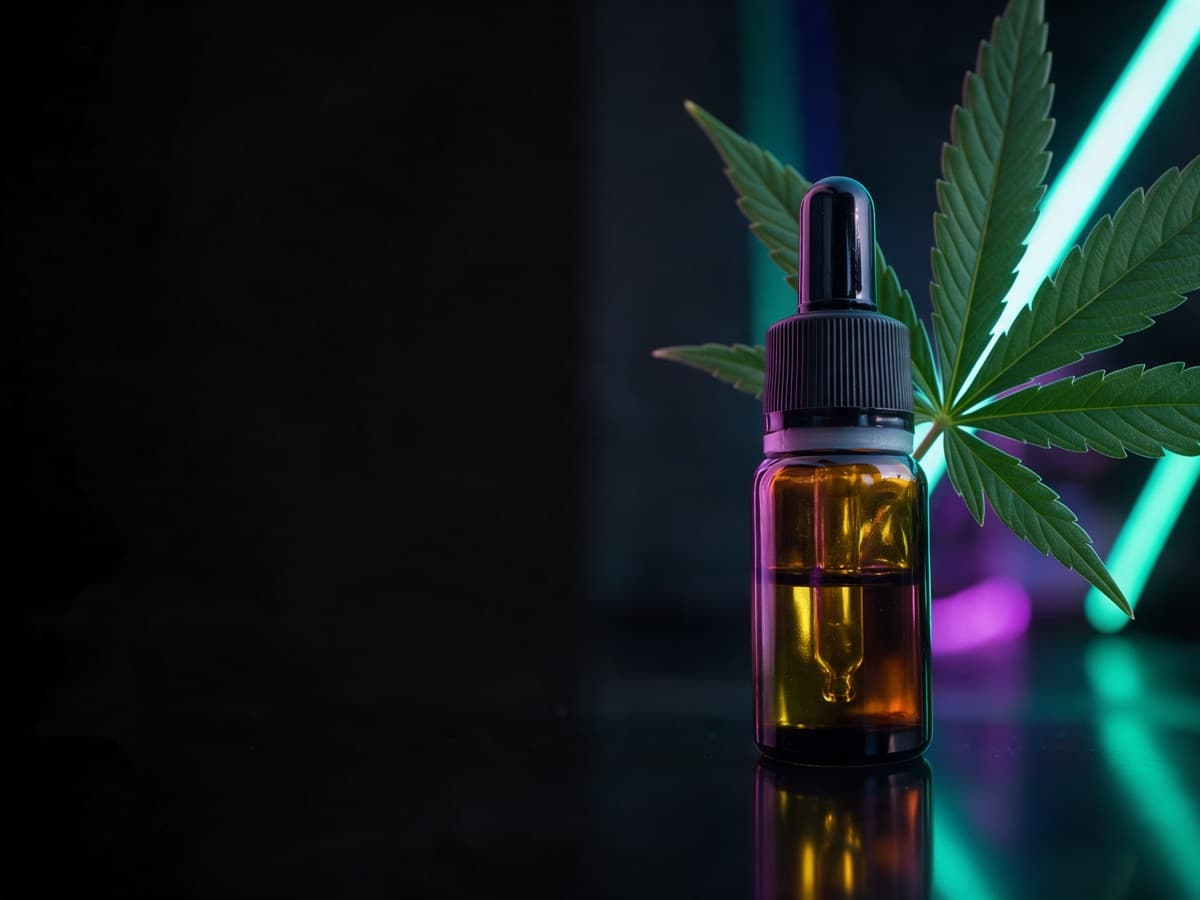
You’re standing in a German shop, or scrolling one, holding a small brown bottle with a dropper. It says “CBD” in large friendly letters. Underneath, in much smaller and much more careful letters, it says Aromaöl.
Aroma oil. As in: something to smell? For a diffuser? For your sofa cushions? The dropper and the milligram figures suggest otherwise, and now you have questions.
You’re not imagining the mismatch. That one word is the visible tip of a long-running argument in EU food law, and it says a lot more about paperwork than about what’s inside the bottle.
Here’s what Novel Food means, where CBD stands as of October 2026, why “aroma” doesn’t settle anything, and what to actually read on a label. If flowers are more your thing, our 2026 rulebook for CBD flowers covers that side, and our buds range is one click away.
The short answer, before the long one
| Your question | The short answer (as of October 2026) |
|---|---|
| Why does it say “Aromaöl”? | Some German sellers label CBD oil “Aromaöl” or “not for consumption”, wording that suggests it isn’t sold as food. |
| Why avoid “food”? | CBD extracts count as a Novel Food in the EU and need authorisation before they can be sold as food. |
| Has any CBD been authorised? | Not yet, as of mid-October 2026. |
| Does the word “aroma” fix it? | Not by itself. A product counts as food if it’s intended or reasonably expected to be swallowed, so authorities and courts look at how it is presented and used, not just at what the label calls it. |
| Is the oil weaker or fake? | The word tells you nothing about strength or quality either way. The label details and lab report do. |
What “Novel Food” actually means
The EU has a rule for foods that are new to European plates. Under Regulation (EU) 2015/2283, a food counts as “novel” if it wasn’t eaten to a significant degree in the EU before 15 May 1997. (Yes, whether something counts as new depends on whether Europeans were eating it in the mid-90s.)
A Novel Food may only be sold as food once it’s authorised and added to the so-called Union list, with specific conditions of use. Before that, the company behind it has to show that the product is safe, and the European Food Safety Authority (EFSA) assesses the evidence.
Chia seeds are a famous example of something that went through this process before becoming a supermarket regular. It’s a queue, and some ingredients wait in it for a very long time.
Where hemp fits in
Hemp itself isn’t the problem. The European Commission’s Novel Food catalogue lists hemp seeds and products made from them, such as hemp seed oil, as having a history of consumption. The German food safety office BVL’s CBD FAQ likewise classes hemp seeds and their products as not novel.
Extracts in which cannabinoids such as CBD are concentrated or added are a different story. The catalogue lists them under “Cannabinoids” as novel, and the BVL’s FAQ (dated April 2025) says that without an authorisation such products aren’t marketable as food.
So the same plant gives you two very different bottles: hemp seed oil for your salad, and CBD extract that sits in the Novel Food queue. They can look alike on a shelf. Legally, they live on different floors.
Where CBD stands in October 2026
For years, the headline was “waiting”. Many CBD applications were submitted, and in 2022 EFSA said it couldn’t establish the safety of CBD as a Novel Food because of data gaps.
2026 brought the first real movement, which by the standards of EU food law counts as a sprint:
- February 2026: EFSA published an updated statement setting a provisional safe level of 0.0275 mg of CBD per kg of body weight per day, around 2 mg a day for a 70 kg adult. It applies only to food supplements containing CBD of at least 98% purity, under strict conditions (no nanoparticles, a production process deemed safe, genotoxicity ruled out), and it was set for adults.
- Who it leaves out: EFSA said safety couldn’t be established for people under 25, pregnant or breastfeeding women, or people taking medication.
- September 2026: EFSA published its first positive opinion on one specific application, a synthetic CBD of at least 98% purity in MCT oil, for food supplements, at the same 2 mg a day level.
An EFSA opinion is a scientific assessment, not a permission slip. The product still needs a decision by the European Commission and the member states before it joins the Union list. As of mid-October 2026, that hasn’t happened for any CBD product: a decision may follow, but none has been adopted yet. Things are moving faster than usual in this area, so check the current status if you’re reading this later.
Keep the scope in mind: the opinion covers a 98% pure synthetic isolate at 2 mg a day, which is a very different thing from a typical full-spectrum hemp extract on a shop shelf. Even a positive opinion covers one narrow product, not CBD oil as a category.
Why some bottles say “Aromaöl”
If a bottle is sold as food or a food supplement, it falls squarely under Novel Food rules, and unauthorised CBD extracts aren’t allowed there. That’s where Aromaöl (aroma oil) comes in: some CBD oils in Germany carry that word, or “not for consumption”, wording that suggests the bottle isn’t meant as a food or food supplement.
In German, Aroma covers both smell and flavour. It sounds harmless, a bit like a candle shop.
The catch: flavourings (Aromen) aren’t an escape hatch from food law. They’re substances added to food for smell or taste, with their own regulation, (EC) No 1334/2008. And food is defined broadly: under Regulation (EC) No 178/2002, it covers anything intended to be, or reasonably expected to be, eaten or swallowed. A bottle with a dropper, milligram figures and tips about holding drops under the tongue is easy to “reasonably expect” to be swallowed.
What a German court made of it
In January 2023 the administrative court in Augsburg dealt with a product sold as “Aromaöl CBD 30%” (VG Augsburg, Au 9 S 22.2403). The court treated it as a food, found it wasn’t a flavouring because the CBD clearly wasn’t there for its taste, and treated it as an unauthorised Novel Food. The sales ban stood.
That was an urgent, preliminary decision rather than a final ruling. But the message is consistent: the name on the front does not outrank how the product is presented and sold.
How to read a CBD bottle without squinting
“Aromaöl” is a way of positioning a product, not a description of what it contains. Think of it like a jar labelled “decorative”: the word tells you how the seller wants it filed, not what’s inside.
Two bottles with the same word on the front can differ completely in CBD content, extraction, carrier oil and quality. Whatever the front says, these are the details that tell you something real:
- Total cannabinoid content: a milligram figure for the whole bottle, plus the volume in ml. A percentage without a volume is half an answer.
- Spectrum: isolate, broad spectrum or full spectrum, which suggests whether other hemp compounds (and, for full spectrum, traces of THC) are present. These terms aren’t legally defined, so confirm them on the lab report.
- THC statement: a clear figure, not just “THC-free” in a pretty font.
- Batch number and lab report: a certificate of analysis from an independent lab that matches the batch number on the bottle.
- Carrier oil: MCT, coconut, hemp seed, olive. It matters for anyone with allergies.
- Responsible company: a real name and address in the EU you could contact if something is wrong.
- Intended-use wording: read it rather than skipping it. If the wording on the bottle and the way the product is advertised point in opposite directions, that’s useful information too.
If a seller can’t tell you the batch number or show you a lab report, that tells you more than any front label could.
Aroma oil, cosmetic, or hemp seed oil?
Hemp bottles in Europe tend to live in one of a few categories, and each comes with a different rulebook:
- Hemp seed oil: pressed from the seeds, an ordinary food ingredient that usually contains only traces of CBD. Great on salads, and not covered by Novel Food rules.
- Cosmetics: oils and balms for the skin, which fall under the EU’s cosmetics rules rather than food law.
- “Aroma” or “not for consumption” products: the grey zone this article is about, where the label and the presentation have to tell the same story.
- Authorised food supplements: a category that could open if the Commission authorises a CBD product. EFSA’s 2026 work is the first step, under narrow conditions.
Mixing them up is easy. The label usually tells you which one you’re holding, if you read past the hemp leaf.
What this means when you shop
The useful move is to stop treating “Aromaöl” as either a red flag or a green light. It’s a sign that you’re in a legally unsettled corner of the market, so do a bit more reading than usual.
Check the label details above, ask for the lab report, and look at the rules in your own country. Enforcement is carried out regionally in Germany and nationally elsewhere in the EU, so how strictly CBD products are policed, and how products such as flowers are classified, can differ from place to place. And since our shop is for adults 18+ only, EFSA’s caution about people under 25, pregnancy and medication is worth taking seriously whatever the label says.
So next time a little brown bottle whispers “Aromaöl” at you, turn it over. The back label is where it starts telling the truth.
If flowers are more your thing
Not every hemp fan is a bottle person. If you prefer flowers, here are a few picks from our range, chosen for taste and terpene profile (check your country’s flower rules first):
- Biscotti: the bakery corner of our range, with cookie-and-sweet-cream notes in its terpene profile.
- Super Silver Haze CBD: citrus zest and herbal pine up front, with earthy spice behind it.
- Weedorizers Grinder: a 60 mm metal grinder with sharp teeth and a magnetic lid, so the herb ends up in your chamber rather than across the table.
Each product page describes the product, many list cannabinoid figures, and lab results are available on request. We strive to offer only products that are 100% legal throughout the EU, but rules differ between countries, so please check yours before ordering. More flowers are in our buds range.
Aroma oil, answered
Does “Aromaöl” mean the CBD oil is fake or weaker?
No. It’s a positioning word, not a description of strength or quality. Check the total milligrams, the bottle volume, the spectrum and a batch-matched lab report instead.
What is a Novel Food?
Under EU Regulation 2015/2283, a Novel Food is one that wasn’t eaten to a significant degree in the EU before 15 May 1997. It needs an authorisation and a place on the EU’s Union list before it can be sold as food.
Is any CBD authorised as a Novel Food yet?
Not as of mid-October 2026. EFSA set a provisional safe level of about 2 mg a day for a 70 kg adult in February 2026 and gave a first positive opinion on one synthetic CBD supplement in September 2026, but the European Commission still has to decide before anything joins the Union list.
Is hemp seed oil the same as CBD oil?
No. Hemp seed oil is pressed from the seeds, usually contains only traces of CBD and is treated as an ordinary food. CBD oil is an extract made to concentrate cannabinoids, and that’s what the Novel Food rules are about.
Does calling a product an aroma oil change the rules?
Not on its own. EU food law covers anything reasonably expected to be swallowed, and a German court treated a product called “Aromaöl CBD 30%” as an unauthorised food in 2023. How a product is presented and sold matters more than its name.
More reading
- Are CBD Flowers Legal? The 2026 EU Rulebook Explained
- CBD vs THC Effects: What Each One Actually Does
- Vaporizers vs Smoking: A Cleaner, Smarter Way to Enjoy Cannabis
Regulatory position as of October 2026, based on Regulation (EU) 2015/2283, the BVL CBD FAQ (April 2025), EFSA’s February 2026 statement and September 2026 opinion, and VG Augsburg Au 9 S 22.2403 (January 2023). This article is general information, not legal advice; rules change, so check the current position in your country.