

A category-defining overview of legal THC alternatives in the EU — hemp buds, oils, novel cannabinoid vapes, and vaporizers — explained in plain terms so you know what exists before choosing.
THC-Ersatz — literally "THC substitute" — refers to a growing category of hemp-derived and novel cannabinoid products that are designed to provide psychoactive effects akin to THC while complying with applicable laws and regulations in the EU. Instead of one single product, it covers an entire landscape: hemp buds, oils, vapes built around novel cannabinoids, and the devices used to consume them. This article maps that landscape in plain terms, so you know what exists before deciding which specific product type to explore further.
What people mean by "THC-Ersatz"
When someone searches for a THC alternative, they're usually not looking for a single item — they're trying to understand the whole category. "THC-Ersatz" is the umbrella term for legal products that aim to recreate a similar sensory or relaxing experience to THC, using cannabinoids and formulations that fall outside restricted THC thresholds. Rather than diving straight into one format, it helps to first see the full picture: what kinds of products exist, how they differ in composition and delivery, and what kind of effects and price range you can realistically expect.
Why these alternatives are legal in the first place
Legal status in this category comes down to two things: cannabinoid content and how the plant material or extract is processed. Products in our range are formulated and tested so their THC content stays within the limits set by applicable EU laws and regulations, rather than relying on strains or extraction methods that push into restricted territory. Some products use full-plant hemp material with naturally low THC levels; others use isolated or novel cannabinoids that don't fall under THC restrictions at all, but are chosen specifically because their molecular behavior can produce comparable effects. We frame this as compliance with applicable rules — not as a blanket legal guarantee — because the underlying regulations are detailed and the responsibility to check local rules always sits with the buyer.
The main categories of legal THC alternatives
Once you understand the compliance logic, the market breaks down into a handful of clear categories:
- Hemp buds — dried flower, sold as full spectrum or broad spectrum, consumed by vaporizing rather than combustion.
- CBD oils — tinctures taken orally or sublingually, generally the mildest and most predictable format.
- Novel cannabinoid vapes — disposable or refillable vape pens formulated with cannabinoids engineered to mimic THC's effect profile more closely than CBD alone.
- Vaporizer devices — the hardware used to heat hemp buds or concentrates without burning them, distinct from disposable vape pens.
Each category has its own trade-offs in intensity, duration, and ease of use. You can browse the full range of legal THC alternative products in one collection to compare them side by side before narrowing down.
Hemp buds: full spectrum vs broad spectrum in a nutshell
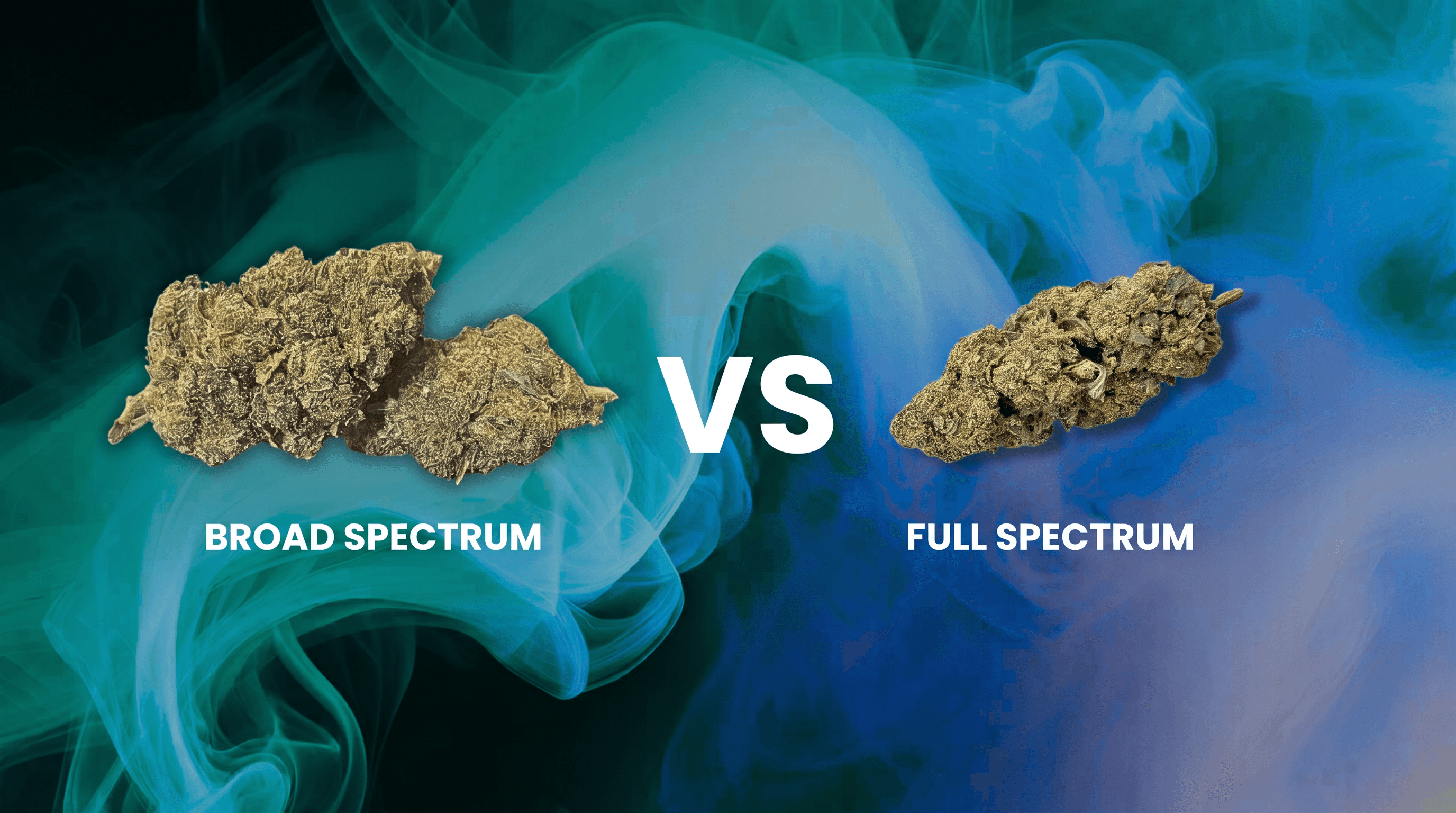
Within hemp buds, the split between full spectrum and broad spectrum is the first decision most buyers face. Full spectrum buds retain the whole-plant cannabinoid and terpene profile, including trace, legally compliant THC levels, which is often described as a rounder, more natural-feeling experience. Broad spectrum buds are formulated around cannabinoids with a molecular structure closer to THC itself, which is generally associated with a more pronounced, THC-like effect. Neither is objectively "better" — it depends on whether you want the whole-plant profile or a more targeted effect. For the detailed breakdown, read the full comparison of full spectrum vs broad spectrum buds.
Vapes and vaporizers: how the delivery method changes the experience
The same cannabinoid can feel quite different depending on how it's delivered. Vape pens are typically pre-filled, portable, and built for quick, low-effort sessions with a fairly consistent dose per puff. Vaporizers, on the other hand, heat hemp buds or concentrates and give you control over temperature, which affects both intensity and flavor. Choosing between the two isn't just about convenience — it changes how fast effects are felt and how they're sustained over a session. If you're deciding between devices, compare vaporizers and vape pens in depth before choosing a device.
How the effects of these alternatives compare to THC
Across categories, legal THC alternatives are consistently described using the same core language: relaxation, euphoria, and sensory enhancement. These are the effects the products are designed to produce, though intensity varies by cannabinoid profile, format, and dose. Broad spectrum buds and novel cannabinoid vapes tend to be positioned as closer to a THC-like intensity, while CBD oils and full spectrum products are generally framed around milder relaxation. None of this is guaranteed or identical from person to person — it's a description of intended effect, not a promise. For a deeper breakdown of how CBD and THC effect profiles actually differ, understand the detailed differences between CBD and THC effects.
What to check before buying a THC alternative
Whatever category you're considering, a few practical checks apply across the board:
- Lab testing: Look for products backed by lab results confirming cannabinoid content stays within compliant limits.
- Cannabinoid profile: Check whether the product is full spectrum, broad spectrum, or built around an isolated novel cannabinoid — this drives both legality and effect.
- Format fit: Match the delivery method (buds, oil, vape, or vaporizer) to how quickly you want effects to appear and how long you want them to last.
- Price positioning: Legal THC alternatives span a range of price points depending on format and cannabinoid concentration — compare listings within the collection to see current pricing framed as "from" a starting price per product.
Taking these four factors together gives you a reliable way to evaluate any product in this category, regardless of brand or marketing language.
Frequently asked questions about legal THC alternatives
Are these products smokeable or vapeable?
Hemp buds can technically be smoked, but they're generally recommended for vaporizing, which avoids combustion and is the more common method among users of this category. Vape pens and oils are designed specifically for vaping or oral use rather than smoking.
How do THC alternatives compare to smoking in general?
Vaporizing — whether through a dedicated vaporizer or a vape pen — is a different consumption method from smoking, with differences in flavor, control, and how the material is heated. If you're weighing up consumption methods more broadly, see how vaporizing compares to smoking as a consumption method.
Do all legal THC alternatives feel the same?
No. Effects vary by cannabinoid profile and format — a CBD oil and a broad spectrum vape are formulated very differently and are positioned toward different points on the relaxation-to-euphoria spectrum.
The legal THC alternative market isn't one product — it's a set of categories (buds, oils, vapes, devices) that each balance compliance, format, and effect differently. Understanding that landscape first makes every downstream product choice easier.