
CBD flowers can be legal in the EU in 2026 when they comply with applicable laws and regulations in the EU and with national rules — here's how to judge compliance yourself instead of relying on a rule that varies by country and could change next year.
CBD flowers can be legal to purchase, own, and use in the EU in 2026 when they comply with applicable laws and regulations in the EU and with the national rules of the specific country where they're sold or used. That's the important nuance: there is no single EU-wide switch that applies one uniform status across every member state at once. Legality is built from a framework of THC thresholds, cultivation rules, and national retail enforcement that varies from one country to the next — and can shift from one year to the next. This article breaks down that framework so you can judge compliance yourself, rather than relying on a snapshot that expires the moment a regulation changes.
What actually makes a CBD flower legal
At its core, the legal status of a CBD flower comes down to three things: where the plant genetics originate, how much THC ends up in the finished flower, and how that flower is classified once it reaches a retail shelf.
Cultivar origin: Compliant CBD flowers are grown from industrial hemp cultivars, not from cannabis strains bred to maximise THC. EU agricultural rules maintain an approved list of hemp varieties permitted for cultivation, and this list is the starting point for any legally grown flower.
THC content thresholds: Hemp cultivation across the EU is governed by a maximum THC content measured in the growing crop. Retail products intended for sale are expected to stay within trace-level THC limits that keep them categorised as hemp goods rather than controlled cannabis.
Industrial hemp vs. cannabis flowers: The visual and aromatic overlap between a compliant hemp flower and a cannabis flower is intentional — they come from the same plant species. The legal distinction isn't appearance, it's the lab-verified THC percentage and the cultivar's regulatory classification.
In short: a flower is legal because of what's measurably inside it and how it was grown, not because of how it looks, smells, or is marketed.
Why 'legal' still depends on where and how you buy
EU-level hemp rules set a baseline — cultivation limits, agricultural classifications, cross-border trade standards — but they don't create one uniform retail rulebook. National governments retain authority over how hemp-derived products are sold, labelled, and taxed, and enforcement patterns vary by country and sometimes by region within a country. Some markets treat compliant hemp flowers as a straightforward consumer good; others apply additional retail restrictions, packaging requirements, or novel food interpretations that affect what can be sold and how.
This is why we frame our own catalogue carefully: Weedorizers products are selected and positioned to comply with applicable laws and regulations in the EU, based on THC thresholds and lab documentation — not marketed as universally applicable regardless of local rules. If you're ordering across borders, it remains worth understanding your own country's current retail stance before you buy, since that layer sits on top of the EU baseline rather than replacing it.
The novel food question and other 2026 regulatory shifts
One of the more unsettled threads in EU hemp regulation is the ongoing discussion around classifying CBD extracts — and, in some interpretations, CBD flower products — under novel food rules. If a cannabinoid product is deemed a "novel food," it would need pre-market authorisation before it could legally be sold as a consumable good in that category, which is a materially different bar than simply meeting THC cultivation limits.
As of 2026, this remains an area of active regulatory movement rather than settled, uniform practice. Our own reading of the landscape — and this is an estimate, not a legal certainty — is that novel food classification is more likely to affect extracted CBD products (oils, isolates, edibles) than raw flower sold for its plant-based cannabinoid and terpene profile, but the boundary between these categories is still being tested in different member states. Anyone relying on flower legality in 2026 should treat this as a live area: check current guidance rather than assuming last year's classification still applies, and expect the framework to keep evolving as EU-level and national authorities continue to align their positions.
Full spectrum vs broad spectrum flowers: does the type matter legally?
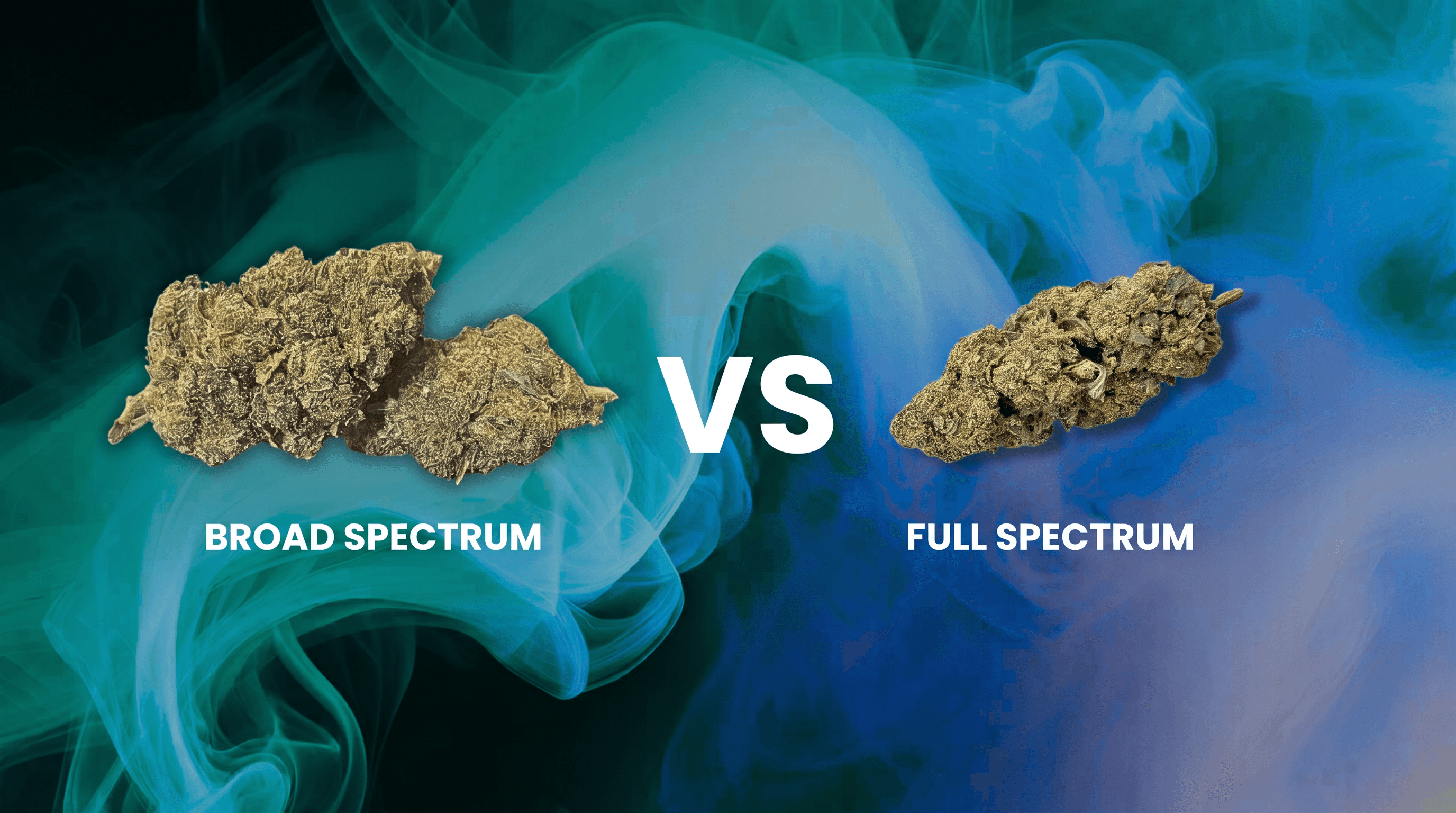
Cannabinoid profile is directly relevant to compliance, because it determines how much trace THC a flower actually contains. Full spectrum flowers retain the plant's fuller cannabinoid and terpene range, including legal trace THC, while broad spectrum flowers are processed to reduce THC further while preserving other cannabinoids. That difference affects both the reported lab percentage and, for some readers, the practical margin of safety when staying within THC thresholds. We cover this comparison in depth separately — see our full spectrum vs broad spectrum comparison for how cannabinoid profile relates to legal THC limits and which option suits different preferences.
How to check a CBD flower is compliant before you order
Rather than taking a seller's word for it, you can verify compliance yourself with a short checklist:
Ask for a lab report (COA): A legitimate Certificate of Analysis should show cannabinoid breakdown, including the specific THC percentage, from an independent lab.
Check the listed THC percentage directly: Compliant flowers list their THC content clearly rather than burying it in vague marketing language.
Look for seller transparency: Reputable sellers disclose cultivar information, batch testing, and sourcing details rather than leaving compliance to assumption.
Match documentation to the batch you're buying: A lab report should correspond to the actual product listing, not a generic or outdated reference sample.
You can apply this checklist directly while browsing our CBD flower and product range, where listings include lab-backed cannabinoid profiles so you can compare THC percentages and documentation before ordering.
CBD flowers vs THC-focused products: keeping the legal lines clear
CBD flowers and legal THC-alternative products sit in related but distinct regulatory and experiential categories. CBD flowers are hemp-derived and regulated primarily around trace THC thresholds, with an effect profile generally associated with relaxation rather than pronounced psychoactive effects. Legal THC-alternative products, by contrast, are formulated specifically to provide psychoactive effects akin to THC — sensory enhancement, relaxation, euphoria — through compliant cannabinoid combinations, and they sit under their own regulatory considerations separate from standard hemp flower. Keeping these categories distinct matters because the compliance questions (THC threshold vs. formulation-specific rules) aren't identical. For a deeper look at how the two compare in feel and legal footing, see our CBD vs THC effects breakdown.
Quick takeaways for shopping in 2026
Compliant CBD flowers are grown from approved hemp cultivars and stay within trace-level THC thresholds — that's the mechanical basis for legality, not appearance or marketing.
EU baseline rules don't erase national differences in retail enforcement, labelling, or emerging novel food interpretation — check current local guidance rather than assuming permanence.
Novel food classification discussions are ongoing in 2026 and may affect extracted products more directly than raw flower, but this is an evolving area, not a fixed rule.
Always verify a lab report/COA with a specific THC percentage matched to the batch you're ordering.
Understand whether you're buying a CBD flower or a THC-alternative formulation — they carry different compliance considerations and different effect profiles.