
Blinking light, weak draw, sulky in the cold? Before you shake your pen at the sky, here is the calm checklist for getting it hitting again.
You lift the pen, you inhale, and… nothing. No vapour, no flavour, just a faint sense that a small piece of hardware is judging you.
Before you shake it, blow into the mouthpiece, or start a philosophical debate with it, take a breath of ordinary air. Most “my pen isn’t hitting” moments come down to a few boring, very fixable things: a flat battery, a cold room, a draw that’s too fast, or a pen that has simply done its job and is now empty.
This guide is the calm version. No tools, no taking anything apart, no YouTube hacks involving paperclips.
Below you’ll find a quick symptom table, then one section per problem, from blinking lights and weak draws to cold-weather sluggishness, charging, storage and travel. If your pen is a Penjamin 3.0, a few tips are specific to its display and voltage button; everything else is general care for vape pens. New to the range altogether? Our What is Penjamin? explainer covers the basics.
Fix it in ten seconds
| What’s happening | Common cause | Try this first |
|---|---|---|
| Nothing at all when you inhale | Flat battery | Charge it, then try a slow, gentle draw |
| Lights blinking, no vapour | Often low battery, or the pen needing a pause | Charge it and let it rest for a minute |
| Thin, weak vapour | Often a rushed draw | Slower, longer, gentler inhale |
| Tight, stubborn draw on a cold day | Thickened oil | Warm the pen in your hand or an inside pocket |
| Burnt or dry taste | Nearly empty, or chain-puffing | Check the oil window and give it a rest |
| Hot, swollen, leaking or smells wrong | Possible fault | Stop using and charging it, then contact us |
1. Nothing happens when you inhale
A very common culprit is also the least dramatic: the battery is flat. Pens that look perfectly fine on the outside can be completely out of charge on the inside, a bit like your phone at 1% pretending everything is under control.
Work through this short list before assuming the worst:
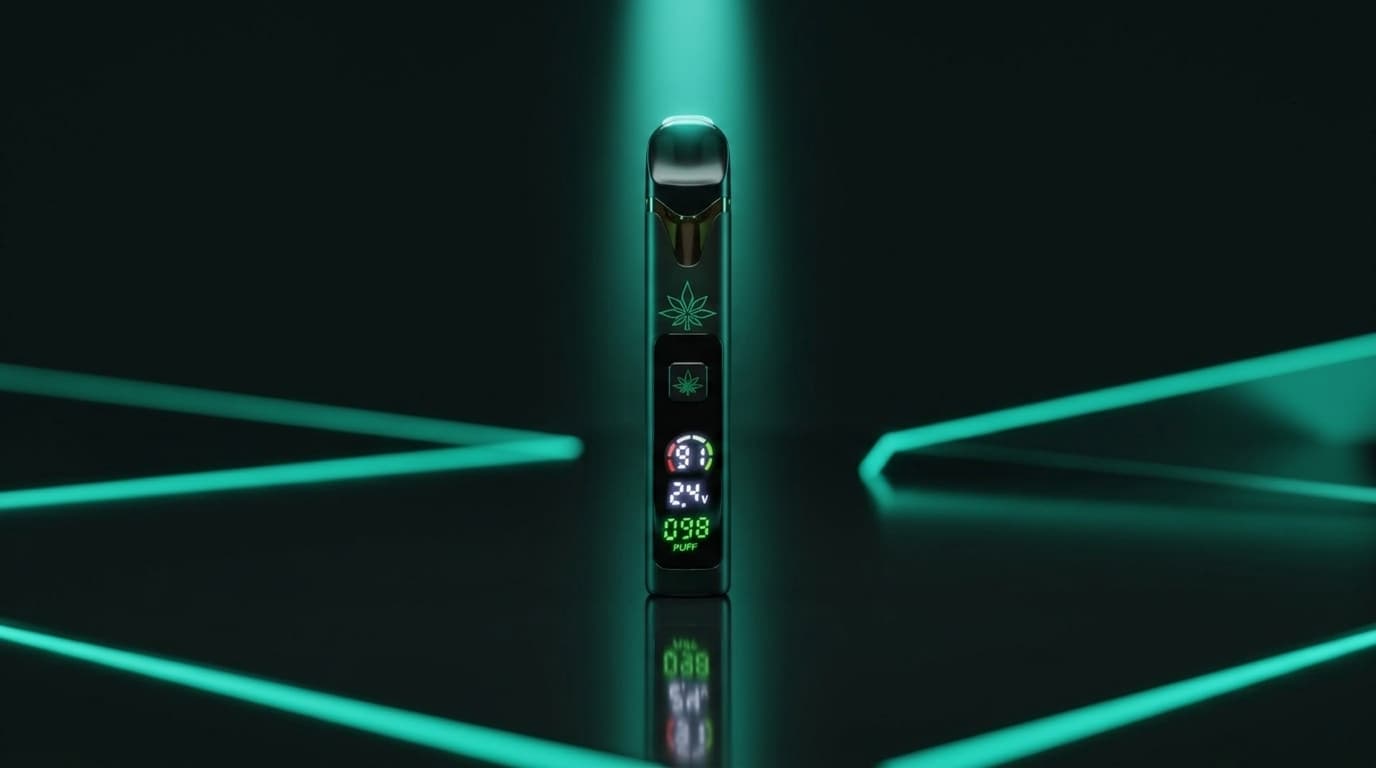
- Check the battery. The Penjamin 3.0’s small display shows battery, voltage and puffs. If the battery reads low, charge it.
- Draw gently. The Penjamin 3.0 is draw-activated: you just inhale. A slow, steady pull, like sipping through a straw, usually works better than a sharp gasp.
- Give it a moment. If you’ve just taken several puffs in a row, let the pen sit for a minute before trying again.
- Check you’re on the right end. We’ll spare everyone the details, but it has happened. To all of us.
If it’s charged, rested and still silent, skip to the section on contacting support. There is no secret ritual beyond that, and certainly nothing that involves opening the device.
2. Blinking lights, or no light at all
A blinking light is your pen’s way of saying something, and unfortunately it doesn’t speak a universal language. Blink patterns differ from device to device and model to model, so we won’t pretend to decode them here.
What almost always helps:
- Charge it fully. A low battery is one of the most common reasons a pen blinks instead of firing.
- Let it rest. Many pens cut out if you hold a draw too long, and some pause briefly after a quick run of puffs. A short break usually sorts it out.
- Read your model’s product page. If your device has a display, like the Penjamin 3.0, the screen tells you far more than a single LED ever could.
No light at all, even after charging? Try a different cable and plug before blaming the pen. Cables fail quietly and often, which is very rude of them.
3. Weak, thin or tight draw
You’re getting something, but it’s more of a polite whisper than a proper cloud. Usually this is technique, not a fault.
- Slow down. A long, steady inhale gives the pen time to heat the oil. Very hard, fast pulls don’t usually help, and on some pens they can pull oil into the mouthpiece instead of vaporising it.
- Check the voltage (Penjamin 3.0). Press the button to set your voltage. If you’ve been on the lowest setting, try one step up; if the taste turns harsh, step back down.
- Space your puffs. Chain-puffing makes the hardware work hard and can bring on a dry or burnt taste. Short breaks between puffs are kinder to the pen and to your throat.
- Don’t chase a stronger effect. A weak draw is a hardware question, not a signal to puff more. For adults 18+ only: start low, go slow, and read the product page.
If you’re on an older model, note that the 3.0 is designed to clog far less than the Penjamin 2.1; our Penjamin 2.0 vs 2.1 comparison has the full family history.
4. Cold weather: when the oil gets sluggish
Oils thicken as they get colder. That’s basic physics, not a defect, and it explains why a pen that behaved beautifully in August turns stubborn at a frosty October bus stop.
The fix is gentle warmth, not heat:
- Hold it in your hand for a few minutes, or carry it in an inside pocket close to your body rather than in an outer jacket pocket or a cold bag.
- Take one or two very gentle draws to get things moving before a normal puff.
- Never use a heater, radiator, hairdryer, microwave or lighter to warm it. Batteries and direct heat are not friends.
- Don’t leave it in the car overnight. Winter cars are fridges, summer cars are ovens, and your pen wants neither.
Think of it like honey: room temperature pours, fridge-cold sulks. Your pen is the same, minus the bees.
5. Charging without the drama
The Penjamin 3.0 charges via USB-C with the same kind of cable as most modern phones. The cable isn’t included, which is mainly a reminder that you almost certainly already own six of them.
- Use an ordinary cable and plug or a laptop USB port. If charging seems to do nothing, swap the cable first.
- Check the port. Pocket lint loves a USB-C port. Look inside with a light; if you see fluff, a gentle puff of dry air on the charging port (not the mouthpiece) can often clear it. Never poke metal objects into the port.
- Charge where you can see it. A hard, dry surface like a desk is better than a bed, sofa or pile of clothes, and unplug it once it’s charged.
- Don’t charge a pen that is hot, damaged, swollen or wet. Set it aside and get in touch with us instead.
These are the same common-sense habits that apply to any small rechargeable device, from earbuds to electric toothbrushes.
6. Storage: cool, dry, upright, out of reach
A pen that lives a quiet, sensible life tends to keep working. Its ideal home looks something like a sock drawer: dark, room temperature and mostly uneventful.
- Keep it at room temperature, out of direct sunlight and away from radiators, windowsills and hot cars.
- Store it upright where you can, mouthpiece up. Many vape guides suggest this so the oil stays where the pen expects it. If your model’s instructions say otherwise, follow those.
- Keep it dry. Bathrooms full of shower steam and coat pockets in the rain are not ideal.
- Keep it away from children and pets, always. Our products are for adults 18+ only.
- Don’t leave it loose in a bag with keys and coins, which can scratch it or press against it. A small pouch or a dedicated pocket does the job.
7. Travelling with your pen
Two separate questions come up here: the battery, and what’s inside the pen.
The battery. Aviation safety rules treat e-cigarettes and similar battery-powered vape devices with extra care. The European Union Aviation Safety Agency’s Safety Information Bulletin 2025-03 states that e-cigarettes are not permitted in checked baggage, recommends carrying them on your person, and says devices in carry-on bags must be protected from accidental activation and cannot be charged during the flight. Airlines can add their own rules on top, so check your carrier’s dangerous-goods page before you fly.
What’s inside. Rules on cannabinoid products differ between countries and can change. A product that you can buy where you live isn’t automatically allowed at your destination, or at every border you pass through on the way. Check the rules for every country on your route before you pack, and if in doubt, leave it at home.
One rule with no exceptions: never drive or operate machinery after using a psychoactive product.
8. When it’s simply empty
Sometimes the pen isn’t broken. It’s finished. Every pre-filled pen reaches the end, usually right when you were settling in for the evening.
Signs it’s done:
- The oil window looks empty, or close to it. The Penjamin 3.0 has an oil window for exactly this.
- The taste turns dry or burnt even with slow draws and plenty of rest between puffs.
- The puff counter is high. The 3.0 is rated at 250 to 400 puffs for its 1 ml, depending on how long you draw and the voltage you choose.
Once it’s empty, please don’t put it in the household bin. Pens contain a battery, so take them to an electronics or battery collection point. Many shops that sell batteries, and most municipal recycling centres, accept them; check your local rules if you’re unsure.
9. When to contact support (and what to send us)
If you’ve charged it, rested it, warmed it gently and tried slow draws, and it still won’t cooperate, it’s our turn. Please also stop and contact us straight away if the pen gets unusually hot, looks swollen, leaks, or smells of burning plastic. Don’t charge it again in the meantime.
To help us help you quickly, send:
- Your order number.
- Which model you have, for example Penjamin 3.0, 2.1 or ECO, and the flavour.
- What happens, in a sentence or two: lights, sounds, display readings, taste.
- A short video or photo, if you can. Ten seconds of a blinking pen explains more than a paragraph.
- What you’ve already tried, so we don’t ask you to charge it a fourth time.
You can reach us by email at support@weedorizers.com or through the chat in the bottom corner of the site. Our FAQ covers shipping, delivery and returns if your question is about the order rather than the pen.
Charge, warm, slow down, rest. Most of the time, that’s all it takes, and the pen stops judging you.
The keep-it-hitting shelf
If your pen has reached its natural end, or you’d like a spare that’s ready when the first one isn’t, these are the easy picks:
- Penjamin 3.0: the next step after the 2.1, with a display for battery, voltage and puffs, an oil window, USB-C charging and adjustable voltage.
- ECO Refill Kit: five REFILL Penjamin ECO cartridges in one bundle, for anyone who already owns the reusable ECO device.
- Penjamin Restock: two Penjamin 2.1 and two Penjamin 2.0 plus extras, for when “one pen” has never really been the plan.
Every product page lists exactly what’s inside. We strive to offer only products that are 100% legal throughout the EU, but rules differ between countries, so please check yours before ordering.
Pen problems, answered
Why is my Penjamin blinking but not hitting?
A low battery is one of the most common reasons. Some pens also briefly stop firing after a very long draw or a quick run of puffs. Charge it fully, wait a minute and try a slow, gentle draw. Blink patterns vary between devices, so if it keeps happening, contact our support team with your order number and a short video.
Can cold weather stop a vape pen from working?
Cold makes oil thicker, which can make the draw tight or weak. Warm the pen gently in your hand or an inside pocket for a few minutes. Never use a heater, hairdryer, microwave or flame.
How do I know if my pen is empty or broken?
If it’s charged, the oil window (on models that have one, like the Penjamin 3.0) looks empty, and the taste stays dry or burnt even with slow draws, rests between puffs and a lower voltage setting, it’s most likely empty. If it’s charged, has oil left and still won’t fire after a rest, contact support.
Can I take my vape pen on a plane?
EASA guidance says e-cigarettes are not permitted in checked baggage and should travel with you in the cabin, protected from accidental activation and not charged during the flight. Rules on what’s inside the pen differ between countries, so check every country on your route and your airline’s rules before you fly.
More reading for pen owners
Product details as stated on our product pages on 17 October 2026. Air travel guidance from EASA Safety Information Bulletin 2025-03 (issued 27 May 2025); airline rules may be stricter, so check before you fly.